Renee Nicole Good and Alex Jeffrey Pretti, killed by federal agents in Minneapolis 17 days apart. Credits: Knot & Anchor Photography; Department of Veterans Affairs
It appears that because we all learned the first few sentences of the Declaration of Independence, some of us think the Trump era is an aberration.
We are living through a period in which the Confederate separatists are ascendant. The ante-bellum South was a repressive society based on obedience and submission. The ruling class consisted of White slaveholders, who raped their women/property and beat their subjects of all ages. Those who resisted were killed or sold. The adultery and violence on the plantation warped the slaveholder’s wife and children.
In the Great Awakening of the 1820s and 30s, evangelicals in the North turned to reform: women’s equality, abolitionism, religious proselytizing. In the South, no outlet from obedience/submission emerged. Honor, growing out of Walter Scott’s novels of medieval English nobility, was the ruling class’ cultural delusion. (Mark Twain, in Life on the Mississippi, spends a couple pages on Scott: “Sir Walter had so large a hand in making Southern character, as it existed before the war, that he is in great measure responsible for the war.”) Preservation of slavery—by which Southern landowners and Northern bankers and manufacturers grew rich—was the priority.
In the 1850s, when slavery’s expansion was rending the nation, the Whig Party collapsed, and in its place rose the American Party—the Know-Nothings who opposed immigration of Catholics (primarily Germans and Irish)—and the Republican Party, which championed free Whites whose prospects were diminished by competition from slave labor. The Republican base included farmers from the former Northwest Territory and abolitionists from New York and New England, who rejected the Compromise of 1850 that allowed the expansion of slavery and obligated Northerners to return escaped enslaved people.
The Civil War Congress, freed from reactionary Southern states, expanded freedom and government action to promote prosperity: internal improvements (post roads, railroads), land grant colleges and the Department of Agriculture, which disseminated scientific techniques. The Union’s industrial superiority eventually subdued the rebellion, paving the way for Lincoln’s Emancipation Proclamation, a war tactic that applied only to rebel states.
With the end of the war and Lincoln’s death, the Radical Republicans passed the 13th, 14th and 15th Amendments and forced the readmitted Southern states to accept them. But the Supreme Court began undoing them within a decade (an effort renewed with vigor this century). By 1876, Northerners had tired of the effort to ensure a measure of economic security for the freed slaves.
My college thesis delved into the Negro Migration of 1879 from the Mississippi Delta to Kansas. Thousands of freedmen boarded boats headed upstream, where they believed they could farm free from the terrorism of the Klan. Their hopes were illusive. The Kansans didn’t want them.
In the West, the federal government reneged on the treaties it had forced tribal chiefs to sign. The Homestead Act, with Lincoln’s signature, created a process to give Western lands to White settlers. The Army made it a practice to attack Indian villages at dawn, killing men, women and children as they slept. By the 1880s, the Army had removed the Indians it didn’t kill to ever-shrinking reservations.
In 1882 Congress passed the Chinese Exclusion Act. It banned Chinese laborers—who constituted a considerable share of the workforce that had built the transcontinental railroads—for 10 years. It prohibited Chinese residents from becoming naturalized citizens.
As America industrialized, workers sought to unionize. The barons, backed by the federal government, employed armed private security forces and sometimes federal agents to kill or jail labor organizers. In 1894 President Cleveland ordered the Army to break the Pullman railroad strike. The labor wars continued for a half-century. Over the same period, Jim Crow tightened his grip on the South, and the Supreme Court upheld separation of the races in the 1896 Plessy decision. In the North, federal and state governments ensured most Black people were confined to ghettos.
Out of President Wilson’s propaganda campaign in support of American entry into the Great War, the government sprouted J. Edgar Hoover’s virulently anti-communist FBI and the post-war Palmer Raids of Attorney General A. Mitchell Palmer. More than 500 people were deported. Congress passed the Immigration Act of 1924, which banned Asian immigration and set annual quotas at 2 percent of a foreign nation’s U.S. population as of 1890. Eugene Debs, a Pullman Strike leader, labor organizer and five-time presidential candidate, was convicted and imprisoned for giving a speech opposing the draft. The Supreme Court upheld his conviction.
Three years into the Depression, Franklin Roosevelt rewrote the government’s contract with its citizens: protections for labor and consumers, the development of a social safety net, Social Security. Our timely renewal generated the industrial might and moral will to defeat fascism. The G.I. Bill and the construction of the post-war Western alliance ushered in a three-decade period of unprecedented middle-class prosperity (for White people). But amid the ideological conflict with the Soviet Union, the McCarthy era stained our new birth of freedom. Among the victims: government employees, homosexuals, Hollywood stars and writers, and the physicist who led the building of the atom bomb.
The Cold War had other aspects as the U.S. sought moral superiority: the Civil Rights struggle that culminated in Brown v. Board and the two civil rights acts a decade later, and the Immigration and Nationality Act of 1965, which undid the 1924 law. Television’s reach required Americans to share a little to win the world over to their ways of being—though in signing immigration reform, President Johnson assured Americans that it would produce no notable change in their complexion. (Boy, was he wrong!)
Our willingness to project generosity didn’t last. We demonstrated our folly and capacity for atrocity in Vietnam. When We the People learned that the government had secretly expanded the war into Cambodia after candidate Nixon had promised a “secret plan” to end it, college students exploded in protest. National Guard troops opened fire at Kent State, and local and state police did the same at Jackson State 11 days later.
By 1978, we had begun building prisons faster than schools. The cost of college began its climb. Women’s rights began to ebb. The war on drugs targeted Black people, not White cocaine users.
In 2016 we elected as president a sexual predator—he boasted of it on tape we all heard. In 2024, after he had incited an attack on the Capitol that left police officers dead, been found liable for rape in a civil trial, and become a felon for his business practices, we elected him again, with a plurality of the vote. His victory in the South was solid. Southerners recognized him, but so did millions of others coast to coast. Their ancestors had marched to the battlefield to protect slavery, on behalf of predators.
Now that president is bombing fishing boats a thousand miles from our borders, sending the military into our cities and deporting people who’ve lived among us peacefully.
Tell me how Donald Trump is a departure from our history.
Some of my 2025 reading, whose theme was wandering through my shelves or used bookstores from Portland to Denton and places in between.
Kai Bird and Martin Sherman, American Promethius: The Triumph and Tragedy of J. Robert Oppenheimer (2005). Sherman spent 25 years researching his subject; Bird assembled the notes into a readable Pulitzer-winning biography from birth to death. My reading revealed the mastery of Christopher Nolan in converting it into an Oscar-winning movie.
James Gleick, Genius (1992). The author reports that Oppenheimer believed Richard Feynman was the most valuable scientist on the Manhattan Project. I have no education in physics, so much of Feynman’s intuitive discoveries is over my head. The personal side of Feynman is terribly entertaining and led me to pick up another book (noted below) that’s a collection of his writings and university lectures, which were fully subscribed wherever he taught.
John Irving, Trying to Save Piggy Snead (1996). An anthology of short stories, essays and memories, among them an account of his invitation to dine in the White House with Ronald Reagan. Irving is a fan of neither Reagan’s aides nor his presidency. Of his decision not to visit the U.S. from his home in Toronto to promote his 16th novel, published in November, Irving told The New York Times: “I could not, would not, in good conscience go to my birth country, when there is such an authoritarian bully in the White House, and when the craven Republicans in the House and the U.S. Senate are complicit in their silence.”
John Frohnmeyer, Leaving Town Alive: Confessions of an Arts Warrior (1993). In a former life, I watched Frohnmeyer’s stewardship of the National Endowment of the Arts from Capitol Hill. His portrait of the George H.W. Bush White House jibes with mine: visionless. A lawyer from a prominent Oregon political family, Frohnmeyer became a fierce defender of the arts and the First Amendment through his battles with GOP demagogues whom I knew up close.
Heather Lende, If You Lived Here, I’d Know Your Name (2006). Engaging essays of an Alaska immigrant living in coastal Haynes, where she writes the local newspaper’s obituaries. If you were to consider moving to the Last Frontier, you should read her work. Note: If you have a serious medical problem, the closest hospital is Seattle.
Mary Means, Something Worth Saving (2025). At times excruciating memoir of a dear friend, recounting a lifelong journey toward healing from a tragic, if outwardly normal, childhood.
Hampton Sides, Blood and Thunder: The Epic Story of Kit Carson and the Conquest of the American West (2006). Even that elongated subtitle doesn’t capture the range of the story, part biography of the country’s most celebrated tracker, part narrative of the Mexican War and army’s subjugation and erasure of Native culture.
Jonathan Raban, Father and Son (2023). Raban has become one of my favorite nonfiction writers. This was his last book, alternating his observations of his partial recovery from a stroke with his research into his parents’ lives and marriage, focused on his father’s British Army service during the Second World War.
Andrea Wulf, The Invention of Nature (2015). The centennial of the birth of German naturalist Alexander Von Humboldt in 1869 was the cause of celebrations throughout the world including the United States. He was the most famous scientist of the 19th century, having proved the connection of all life in a single ecology. Von Humboldt spent five years traveling the Americas, at the end of which he met with President Jefferson and Secretary of State Madison. He was an inspiration for his friend Simon Bolivar; his prolific writing was the roadmap for Darwin’s journey to “The Origin of Species” and inspiring for the contemplations of Emerson and Thoreau.
Porter Fox, Northland (2018). The author spends a couple years traveling the U.S. border from Maine to the Pacific. Among his chapters: the French exploration headlined by La Salle; how it is that Americans speak English rather than French; the largely liquid border of Minnesota; and the exploration and marking of the 49th parallel.
Barry Hatton, The Portugese: A Modern History (2011). A British reporter for the Associated Press, longtime resident of Portugal, traces the nation from its founding through the Age of Discovery to the Salazar dictatorship that ended in a 1974 military coup, to its admission to the EU and the 2008 financial crisis. For the U.S., the pertinent history is that Salazar’s rule was characterized by the same aims as the Trump administration’s: an economic elite controlling a poorly educated underclass with no social safety net. For 50 years since, the Portuguese have sought to weave themselves into the European Union and its higher standards of education and development.
Jonathan Raban, Bad Land: An American Romance (1996). My fourth trip through the world of the author is about the settlement of eastern Montana primarily by Northern Europeans in the early 20th century. The gist is that it’s how American capitalism works: The government, having erased the Indians, gave away their land to white homesteaders, who were drawn to the arid prairie by the evocative and false advertising of railroad executives. The railroads needed passengers and their agricultural production to fund their expansion. Settlement was propelled by the “scientific” theory that growing populations west of the 100th meridian would create the rainfall needed to flourish. The homesteaders were suckers. Their children continued migrating west, settling in places like the Idaho panhandle, where distrust of the federal government is most intense. Think Timothy McVeigh, Ruby Ridge, Aryan Resistance and Ted Kaczynski.
Jonathan Lethem, Motherless Brooklyn (1999). A joy of the independent bookstore is that titles can jump into your hands. I wanted to read the novel Edward Norton shaped into the movie. The novel, set in contemporary New York, is a first-person account of wayward children and small-time crooks. Norton transformed it into the best movie of 2019, set decades earlier, about Robert Moses and the big-time crooks who made New York’s infrastructure what it is.
Ralph Leighton, editor, Classic Feynman: All the Adventures of a Curious Character (2008). All the words are Feynman’s, from the physicist’s prodigious output. Credit Leighton for arranging them into an entertaining memoir I didn’t want to put down.
Barbara Kingsolver, Demon Copperhead (2022). My only explanation for not having read every word she’s published is that I don’t read much fiction. Masterfully told tale of characters playing out what ails us—poverty, ignorance and government/corporate malevolence—set in the Appalachian toe of Virginia amid the unending opioid epidemic (one in eight babies is born addicted, Kingsolver reports in a December 22 NYT column). The last two pages left my soul agape. Barry Hatton, “Queen of the Sea: A History of Lisbon” (2018). We couldn’t find many books in the U.S. about Portugal. I bought this one at a bookstore in Lisbon and started it on our way home. It draws me back to the city, the second-oldest in Europe, where we spent a week in November less as tourists than as potential immigrants. On our next visit, I’d like to see the historical sites we largely bypassed as we focused on its vibe.
Yesterday we gathered in Austin for the memorial for my aunt Marilyn Dickie, on a warm day in a light-filled chapel with friends, most of them generations younger than our 95-five-year-old matriarch of seven children, all of them present, all speaking to an aspect of her life. The theme was how lucky she thought she was, and how lucky we were to be in her orbit.
Marilyn babysat my dad, four years younger, when their parents were friends in Denton. A refined woman of gracious Southern manners, she had married a cowboy, my uncle Alec, and moved to Washington, Alec to work for Senator Ralph Yarborough, the liberal bête noire to Lyndon Johnson, who in his congressional career built a personal fortune from the bidniz of Texas. When my dad finished law school in Austin in 1962, he was drawn to the Capitol by John F. Kennedy’s call: “Ask not what your country can do for you, ask what you can do for your country.” With Alec in the room, the senator hired my dad. Marilyn and my mother, also a refined woman of gracious Southern manners, became best friends for the next four decades, until my mom died, in Austin, 20 years ago next month.
I have a bunch of cousins, all of them then and now in Texas. The Dickie clan didn’t feel like cousins but more like siblings, especially child five, Joe (here leading “Keep on the Sunny Side” on guitar). In my experience, cousins live 1500 miles away. The Dickies lived a short drive across Arlington.
I wasn’t one of Aunt Marilyn’s godchildren, as the Dickies became extended family when I was 4. Six years later we—the Mintons, Yarboroughs and others—used multiple cars to ferry them and their luggage to the airport. Alec, by then with USAID, was going to Nairobi just before Nixon was inaugurated. (It was one of their several foreign stints in serving Kennedy’s second line: “Ask not what America can do for you, but what together we will do for the freedom of man.”) When they returned four years later, I spent weekends on their farm outside Berryville. Before and after their excursion, I rode Uncle Alec’s horses over hill and dale along the Shenandoah, an experience that in my 40s led me to buy into a similar gentleman’s farm on the east side of the front range, in Sperryville.
Marilyn was “best man” when my dad married Phyllis in 1980, a wedding with seven witnesses, including me. In 1995 I named my second child after her. In 2012, eulogizing my Dad through wails of tears, Aunt Marilyn put her hand on my back. I returned to Austin for Uncle Alec’s memorial service six years ago, and took Phyllis to Austin in January just to be in her presence.
I last spoke to her shortly after her birthday, in June. I told her what I was up to—going to the Tour de France—and she told me, again, how proud she was of me, how much she loved me, how much she missed my mom.
I am lucky because—well, that’s obvious. I was born into a family endowed with education and support. My mother’s father put Dad through law school. In our post-war bloom, a (white) man could go to work for our government and his modest salary could support a family and a mortgage and a car and vacations and never miss a meal. And now that I’m a senior citizen, I benefit from a Congress that virtually guarantees that people with my background and education and acumen can go to the Tour de France on a lark.
I just spent a week on five airplanes, visiting a dear friend in Tulsa, and then Phyllis in Denton. We had meals out and toured museums, and in Fort Worth we splurged on a downtown hotel. We picked up my sister, who’d flown in from SoCal, and drove to Austin, where my stepdad hosted us in the house where my mom died. Then we gathered with these mutual witnesses of six decades. All of it went off without a hitch, and I arrived home at midnight. I am grateful.
The TSA agents and air traffic controllers had gone without pay for a month because the president and congressional majority are guided not by “ask not” but by what-can-I-get. And in every city of any size including Portland, Tulsa, Denton, Dallas, Fort Worth and Austin, people are lined up at food pantries, not just because their president appealed to the Supreme Court to cut off SNAP but because this is the country we’ve created, and this is the government we’ve elected.
The Dallas Holocaust and Human Rights Museum, which we toured six days ago, frames a chronological narrative of the rise of the Nazis, who used language no different than the man riding down the golden escalator. In the decade since, “Young Republicans” are caught on social media praising Hitler, and podcasting demagogues in the mold of Father Caughlin provoke outrage and yawns. This is how it started.
I am so furious that tomorrow Laurie and I will fly to Portugal. We are investigating whether and where we might expatriate. There’s an irony: Portugal was ruled by a fascist dictator for 40 years. The Salazar regime’s program was much like the current occupant’s: a corrupt elite ruling a country illiterate and detached, without adequate schools, hospitals or engines of prosperity. After the 1974 bloodless coup, the military staged free elections, drawing candidates from Stalinists to fascists. Amid the Cold War, the U.S. having excused the government’s horrendous human rights record to ensure Salazar would remain in the Western fold, Henry Kissenger assumed the people would fall into the Soviet orbit. But the voters chose left-of-center social democrats in the mold of post-war Western Europe. The Portuguese are still recovering from lost decades, but they love the EU, and they are very tolerant. Tolerant, period. My quip about our exploration is that I’m interested in a country that has known fascism and rejected it, rather than one that is sinking into it.
I doubt we’ll make the leap, but I want to be prepared. After seven years in Portland, I feel attached to my community and fascinated by the western half of my homeland, studying five centuries of European conquest and colonization west of the 100th meridian. And as my Dickie sibs said, my family is here. I don’t want to leave. Maybe we’ll wake up. With or without blood.
On my Ruminations site, I’ve posted a travelogue of my 4,000-mile drive through the Northern Rockies with photos and mix of history and contemporary politics. I’m convinced South Pass is the most important spot in American history, with the exception of Gettysburg.
Spring 1979: Students protest UVA’s attempt to shutter the student newspaper
And Faulkner lives forever.
Because it feels personal, I offer my perspective on the federal government’s assault on the University of Virginia. The Justice Department’s demand for the head of President James Ryan spurs me to describe two earlier chapters of my alma mater’s administration. My tale weaves in and out of the American arc over four centuries toward, and away from, an equitable society. Which way we are swinging should be obvious. If it’s not, bear with me.
When I attended UVA (1977-81), it had a fine academic reputation and an august founding narrative. I found it culturally conservative and a bastion of what we now recognize as white male privilege—of which I have always been a beneficiary, though at the time it was just what was. For those born in recent decades, it’s impossible to convey the good-old-boy racism of a place like “Mr. Jefferson’s Academical Village.” Fraternities were dominant in the culture. Undergraduate women had been admitted for only seven years, and Black students were rare—fewer than 500 out of some 14,000. I never had a Black professor or TA. I had one Black friend, though acquaintance would be more accurate—he disappeared after one semester. Charlottesville was a Southern backwater, a judgment I formed over the summer after my freshman year, when I worked construction and experienced the town’s racial chasm as a divide between skilled and unskilled labor. Nevertheless I pinched myself walking Thomas Jefferson’s “Grounds,” and I had some excellent professors.
In the history department, where I would spend several years immersed in the ante- and post-bellum South, the atmosphere was of homage to emeritus professor Dumas Malone’s six-volume biography of Jefferson, which won the 1975 Pulitzer Prize in history. Viewed more skeptically was Fawn Brodie’s 1974 biography of Jefferson, which revealed to a wider audience that our founding father also fathered six children by Sally Hemings (a fact well known in some Charlottesville precincts). Up on the hill at Monticello, none of that history was discussed; today it is inseparable from the narrative tourists receive.
For years, when people asked about my college experience, I said that I spent the first three years at war with the administration and the fourth studying. My foxhole was the student newspaper, and nearly everything I know about journalism I learned from my editors at The Cavalier Daily. Among them: Robert Melton, who went on to The Washington Post; George Rodrigue and Mike Vitez, who won Pulitzers; and Nancy Kenney, who wound up at The New York Times. In my first year on the paper, my beat was the administration; I met regularly with the dean of students and the provost, relationships that were cordial and occasionally adversarial.
The Cavalier Daily had no faculty advisor; the school had no journalism department. We had free office space in the student union and a modest subsidy from the student activity fund (which we surrendered rather than relinquish the monthly stipend we paid editors, all of which went to the basement rathskeller for take-out sandwiches while putting out the paper). Our relationship to the university was technical: the board was the publisher.
The crucible during my three years on the paper was the university president’s attempt to impose a censorship board over us, prompted by members of the right-wing Young Americans for Freedom. Rodrigue, as editor-in-chief, had denied them column space because of their affiliation with a political group; the paper didn’t accept guest columns from any political group, not because of their politics but because they were political.
The president was Frank Hereford, a UVA physics professor the board had hired in 1974. That January The Cavalier Daily reported his membership in a whites-only country club (no Jews either, even as guests), and Rodrigue (along with Jim Reagen and Jim Grossberg) was among those relaying developments in the controversy—which spread to the Charlottesville Daily Progress, Richmond Times-Dispatch,Washington Post, New York Times and even Time magazine. The “CD” waged a crusade demanding his resignation from the club and regularly reported complaints from Black students that the administration ignored the problems of a tiny minority at an institution literally built by their enslaved ancestors. The Daily Progress and the Times-Dispatch defended Hereford’s “right of free association.” Their respective headlines were “A Test of Liberalism” and “Unfair Demands.” The Daily Progress publisher was a club member. So were about 150 faculty members.
The Farmington Country Club’s president told the Post, “Hell, we’re not going to run the club to suit the university.”
Hereford’s membership was a symbol of the university’s insufficient effort to attract Black faculty and students. Hereford’s, and the university’s, perceived indifference to the problems of Black students was the context for the controversy. In an article in the Norfolk Virginian-Pilot, Black students told a reporter that Hereford’s membership was “an issue for white liberals trying to satisfy their collective conscience.”
For Black students, the November 1975 article reported, “the reality of life in that overwhelmingly white community is isolation—isolation from the majority of students, something they seem to expect, isolation from the black communities they grew up in, and even isolation from each other inside the university.”
The Times, in December, in so many words suggested the mounting debate was central to the dilemma facing what had been—and in many ways still was—the capital of the Confederacy. Professor Paul Gaston told the paper, “The problem is how the university can remain loyal to the traditions of an older Virginia and, at the same time, protect and further its reputation as a national and international university that appeals to people with the most disparate backgrounds.” (Wow, does that resonate a half-century later.)
Finally, after a mail-in poll of club members rejected a change in policy by 2-1 and the board reaffirmed no change, Hereford resigned.
How do I know all this, 50 years later? Because in 2021, at a CD alumni weekend, the editor-in-chief and leader of the campaign, Dusty Melton—older brother of my mentor Robert—gave us a set of photocopied clips and outlined the story I have summarized above. In his swan song published after his term ended in March 1976, Melton wrote of the Hereford saga: “The far more important and immediate lesson to remember is the disgrace the University suffered in the national press and at home for his intransigence and callous disregard for the people and school entrusted to his leadership.”
It would only be human to hold a grudge against the paper that fomented the issue.
Fast-forward not quite two years, when Hereford demanded imposition of the “media board” in the 1977-78 academic year. The president continued to do so when Mike Vitez succeeded Rodrigue. In 1979, when Rick Neel succeeded Vitez, Hereford issued an ultimatum: agree to the supervision of the media board or lose your office space. Neel said, Um, no. Hereford said: then you’re out of your office.
That the university founded by the author of the Declaration of Independence would close the student newspaper was too delicious.
The Charlottesville Daily Progress told us: Y’all can work here. The national press picked up the story. After three days of using our office phones (the doors remained unlocked) and composing the paper across town at the Progress (where we were increasingly a pain in the ass), students rallied on the Lawn and marched to Hereford’s castle. Meanwhile, Neel made a deal: The paper would acknowledge the authority of the media board provided it had no actual authority. I don’t recall that we ever heard another word about said media board.
(My favorite photos from college are of the student protest. In the one at top, a student holds a sign, “THE CD MAY SUCK BUT IT DOESN’T KISS ASS.” Just above I captured Hereford’s wife Ann, standing in front of her house and smoking a cigarette, glaring at students angry at her husband.)
Our spat more than four decades ago was nothing compared to the Harvard/Columbia/Paul, Weiss/etc. treatment from Donald Trump’s Civil Rights Division, which appears committed to turning UVA into something like Hereford’s country club. And making each of us kiss ass.
The UVA board in March, aligning with Trump executive orders, demanded dissolution of the university’s Office of Diversity, Equity, Inclusion, and Community Partnerships (successor to the Office of Minority Affairs Hereford had created after his ordeal). Republican Governor Glenn Youngkin, who has mimicked Trump’s cultural agenda, praised the board’s action. Diversity programs were a hallmark of James Ryan’s tenure, and several board members reportedly urged the board to fire Ryan, either out of fear that Trump would pull, by the Times’s estimate, $355 million in research contracts (a contract is a contract unless it’s with the government) or because they hold similar views about threats to white privilege. We don’t know, as they have been silent since Ryan’s resignation two days ago.
The Civil Rights Division, like other executive agencies, has had its purpose turned on its head. The assistant attorney general, Harmeet K. Dhillon, has a lengthy list of press clips on her former firm’s website personally attacking Democrats and defending Republicans. Her deputy Gregory W. Brown was an attorney in Charlottesville affiliated with the Jefferson Council, a group of (aging) alumni aiming to “lead the University of Virginia back to Thomas Jefferson’s legacy of freedom and excellence.” Its founders include Bert Ellis, a Youngkin UVA board appointee whom the governor fired in March for unspecified violations of the state’s “Code of Conduct for Boards and Commissions” and the UVA board’s own statement of responsibilities. Ellis led notorious critiques of Ryan’s tenure, especially his efforts to diversify the student body.
It was Gregory Brown, The New York Times reported, who demanded Ryan’s resignation as the price of ending the government’s investigation bent on enforcing Trump’s anti-DEI executive orders. Brown sued Ryan and UVA twice last year. Matan Goldstein, an Israeli-American freshman, alleged antisemitic harassment by UVA officials and pro-Palestinian groups. He also represented Morgan Bettinger, a 2021 graduate who was accused of mocking a Black Women Matter protest and reportedly faced expulsion until UVA’s investigation found insufficient evidence. Both cases were settled.
After Youngkin fired Bert Ellis, he nominated Ken Cuccinelli to succeed him. Cuccinelli is a former state attorney general and Homeland Security official during Trump’s first term. (A federal judge in 2020 ruled that Cuccinelli’s appointment as acting head of the Citizenship and Immigration Services violated federal vacancy law and he therefore lacked authority to issue policy directives.) Cuccinelli’s nomination, and those of seven others to state college boards, was rejected by the Democratic-controlled Senate Privileges and Elections Committee on May 30. State law requires confirmation by the House and Senate, but Youngkin told the board to seat his nominees anyway because the House and Senate in full had not acted. The Senate committee’s Democrats last week sued the three boards’ chairs. On June 24 Youngkin named four more board members to succeed those appointed by his predecessor, Democrat Ralph Northam. Youngkin will have seated the entire board as of July.
The outrageousness of this chapter led me to review the third. It’s something of a precursor.
In June 2012 board chair Helen Dragas, with no warning, asked for the resignation of President Theresa Sullivan, hired in 2010, and Sullivan submitted it. After two weeks of uproar, during which it was revealed that Dragas had acted without a vote of the board and had failed to follow its procedures, the board unanimously reinstated her. Republican Governor Bob McDonnell reappointed Dragas days later, and the Republican-controlled General Assembly confirmed her for a second four-year term when it met in January 2013. Sullivan announced her intention to retire in 2017, and Ryan succeeded her in August 2018.
Nine months after the Dragas episode, the American Association of University Professors released an investigative report. It is fascinating in its probe of the institution and of the incident. Striking is its analysis of the board:
“According to everyone with whom the investigating committee spoke, the critical factor leading to appointment to what is a much sought-after post, considered to be among the most prestigious the governor can make, at least until last summer, has been the amount of financial contribution the appointee has made to the governor’s electoral campaign. . .
“Rector Dragas, a UVA alumna with a bachelor’s degree in economics and foreign affairs awarded in 1984 and an MBA from the Darden School received in 1988, is a successful real-estate developer from Virginia Beach, Virginia. Most of the other members of the board also come from business backgrounds, several, like Ms. Dragas, from successful medium-sized enterprises; few have had experience with large, complex business organizations or the administration of institutions of higher education.”
Nearly all the current board members are lawyers or business executives. Most have one or more degrees from Virginia. To what extent they have contributed to Youngkin’s political operations, I don’t know. But I can surmise their alignment with his values.
Coda. In 1976 the Robert F. Kenndy Journalism Awards recognized as Best Student Coverage a Cavalier Daily series the year before “setting forth the complaints and concerns of the black students at U.Va. As articulated by black student leaders these included the observations that the social atmosphere was geared exclusively toward white students; that the university had conducted many studies of minority needs at the school but had been slow to act on the findings; that too few blacks were hired as faculty and fewer yet attained high positions in the school administration; and in essence that there was a lack of commitment to the betterment of the quality of life for minority students. . .
“Much credit is due the Cavalier Daily for the substantial coverage given to the events of last fall which led to the creation of the Office of Minority Affairs.”
It is that successor office which the University board has now dissolved.
On day 5 of a different America, Portland feels safer than most places I could be.
Oregon Democrats won most of the races, flipped a U.S. House seat, retained all three statewide offices on the ballot, and captured a state senate supermajority. But the reason I feel safer is the new mayor, who in his acceptance speech encapsulated the opposite of Donald Trump’s ethic. Keith Wilson told a gathering at the community center where he had played as a child:
My life and career evolved alongside our city. We are rich in our diversity and are shaped by the many paths we took to get here today. From those who have been here since time immemorial, to those who came here seeking a better life, to our ship builders in Vanport, to shop keepers in Albina, and to those immigrants and refugees who have only just arrived: Every neighborhood matters, every community matters, every person matters.
That Wilson named two neighborhoods, Vanport and Albina, is an acknowledgment of the racism in the DNA of our city and state, which under its territorial constitution slavery was banned and so were Negroes. We don’t ban books.
Vanport was the community of 10,000 homes Henry Kaiser built on a flood plain north of city limits during the Second World War for ship builders and their families. (Its health care center was the seed for Kaiser Permanente.) When Portland was racist to the core, Kaiser’s 40,000 recruits included 10,000 Blacks (six times the city’s pre-war population) and the schools he built were integrated. Vanport’s population after the war fell by half, and about a third of those remaining were Black. In the spring melt of 1948, a dyke on the Columbia burst and destroyed the community, displacing 5,300 families. Portland officials were aware of the threat but reassured residents they were safe.
After the erasure of Vanport, the heart of Black Portland shifted to Albina, where I live. Nearly half its residents were Black. As in other Northern cities, Portland’s fathers created a ghetto, compressed by redlining, restrictive covenants, and municipal disinvestment. But its residents nevertheless developed a thriving community where Duke Ellington played and Martin Luther King Jr. preached. Then starting in the 1950s, neighborhoods in Albina were razed to make way for a coliseum, highways and expansion of a hospital, displacing more than a thousand families. When federal money for the hospital ran out in the early ’70s, several acres that had been the commercial core remained cleared. To this day.
Wilson pointed to that history.
The second-generation head of a 70-employee trucking company with a “green” fleet, Wilson, 60, ran a bootstrapped campaign against two well-funded and well known challengers. The early favorite, Rene Gonzalez, ran on law and order and was endorsed by downtown business and the police union. In two years on the city commission, Gonzalez showed us a knack for not playing well with others. His most notable policy decision was to stop agencies from distributing tents to people living on the street. He finished third in a field of 19.
By contrast, Wilson founded a nonprofit, Shelter Portland, to address homelessness in a way our poorly coordinated city and county did not. He aims to end homelessness—which he defines as a person without a roof over her head on any given night—within a year.
Portland has had a housing shortage dating to the early 20th century, when our boomtown had more homeless people per capita than any other city and ranked fourth in absolute numbers behind Chicago, San Francisco and New York. Since Covid, homelessness has consistently polled as our worst problem. Whether we can improve remains to be seen.
Here’s the other element in Portlandia’s approach that gives me hope. Two years ago voters adopted a new charter, developed by a citizens committee. It recommended trashing the century-old commission system, under which five commissioners, including the mayor, were elected city-wide and served as the policy-making board and as heads of departments. That is, a commissioner was a legislator and an executive of one or more bureaus. We finally abandoned this Progressive Era “reform” a century after most other cities recognized its flaws.
Under the charter we’ve just implemented, we used rank-choice voting to elect 12 policy-making councilors from four districts, ending the domination of downtown business interests and enabling modestly financed candidates to mount smaller campaigns. I thought it was crazy to have the top three winners in each district elected, but now that we’ve been through the exercise, I am encouraged by the emerging diversity of voices and the results.
The mayor’s role is no longer setting policy but overseeing city management and setting a tone. That’s a challenge, considering nine agencies are charged with trash collection and public works are siloed into narrow, uncoordinated bureaus. I would have preferred a strong-mayor structure typical of big cities (Portland has 620,000 residents). But we did reform, a step inconceivable under the U.S. Constitution.
I moved here six years ago, drawn to the creative, entrepreneurial vibe. It is a world away from the power-obsessed nation’s capital that had been home since John F. Kennedy was president. We cannot escape Trump, who in 2020 sent masked agents to our city absent any request. But my town remains dedicated to the freedom to be who we are, where our focus on Saturdays is meeting up at the farmers market and embracing the spirits of all who call it home.
Alexis was sitting on the stoop. A 28-year-old registered Democrat, my data informed me, he affirmed he was voting the straight ticket. His English, through a Spanish accent, was flawless. I asked him where he was from. Southern Mexico. And what did he think about voting here? I cannot quote him, because my brain could not keep up with his eloquence. To paraphase:
Coming from the Third World, Alexis saw that rich people care about themselves, not about the multitudes who struggle to keep their families whole, and the privilege of voting indicates that everyone in the United States is entitled to a dignified place in society. I asked him why he was a Democrat. Because the Democrats, he said, care about ensuring that everyone has a chance to live with dignity.
For a moment I stared at him, speechless, then asked if he might canvass these final two weeks around his Las Vegas neighborhood. He had no free time, he said: A single father, he also cares for his brother, 25, who has Down’s Syndrome. I asked to take his picture, something I had not done in 12 days of walking door to door. He graciously obliged.
In the heat of the Portland summer, I had conceived this thousand-mile drive to Nevada in mid-October because it is the closest swing state, and I have the luxury of time and a place to stay, thanks to my friend Kathy (who walked with me my last four days). In the blazing heat where one out of five knocks answered is a spectacular result, I had no inkling I would learn so much from this cross-section of fellow occupants of my fair land. (I had forgotten similar travels in other election years.)
At the first door and every door thereafter, I took in the façade, the porch, the yard and what’s in it, the cars in front or in the driveway—or not. I absorbed details and judged before the door opened, or didn’t. When it did, the lesson began.
My canvassing targets, which I called up on my phone, were identified by a map, address and name according to Clark County’s voter rolls. Also age, gender, party: D, I, O (other), L (Libertarian), NP (non-partisan) or, rarely, R. (As in many states, a Nevada voter is registered by default at the DMV.) If she was registered and neither a Republican nor reliably voting Democrat, she was likely on my list.
From social media and TV, I’d think we’re on the edge of civil war, and maybe we are. But face to face, people are mostly respectful, civil, even kind, no matter my politics or theirs. Many said: Be safe, and they meant it. My paid supervisor Dave confessed that he’d been afraid on his first day canvassing. But after the first guy slams the door in your face and you’re still fine, you move on.
An hour into my first day, an elderly man with an auburn toupée opened the door. I introduced myself as a volunteer with Nevada Democrats and explained why I was there: to talk to his wife, who was on my list. “What the fuck are you doing?” He closed the door.
But at the first house an hour earlier, a woman in her late 20s holding a one-year-old told me her top issue was reproductive rights. Kristen had had an abortion after having been raped. “Trump scares me.” I suggested that hers was a new response to changed conditions: an open admission to a stranger about her life and her choice. Yes, she said, “Before I was ashamed, but not now. This is too important, and I want to protect my daughter and her future.”
On my last morning, Dana (Independent, 66) came round from the back and shooed us away. “I know who I’m voting for and I don’t need to talk about it.” Eight minutes into a conversation with a young trans woman kitty-corner to Dana’s house, I spied him sitting on the wall on the edge of his yard. When Kathy and I finished clarifying for Briteni the GOP campaign against “boys competing in girls’ sports,” Dana approached and apologized. “I’m a proud Reagan Republican,” he said, then expressed bewilderment at what’s happened to his party. He’ll be voting for Kamala Harris and the other Democrats.
Notes among other conversations:
On my list: a 50-year-old woman (I) and a 20-year-old man (NP), on the edge of town, with La Madre Mountain looming just west. A middle-aged man answers the door. I say to him, You aren’t on our list, so you must be a Republican or a reliable Democrat, which is it? “Republican. I’m voting for Trump. My son is military. We’re all Republicans.” I inquire: Please if you would, tell me how someone serving his country supports a candidate who shows nothing but disrespect for your service? Robert comes out on the porch and goes in another direction. “I would just like someone who makes our country better,” an improvement on Biden. I ask, What is it about Biden that you’ve found disappointing? Pulling out his money clip, he says, “When Trump was president, this was a lot thicker.”
And so begins a 15-minute conversation as we rocket from subject to subject, and I find myself responding to his queries: about the so-called Trump tax cut, which House Republicans had been developing for years and which was financed by our grandchildren amid a robust economy, in which corporations had cash to burn; the inflationary effect of Congress pumping trillions into the collapsing Covid economy; the Inflation Reduction Act as an investment in domestic manufacturing, chip research, and green energy so that China won’t eat our lunch; Trump’s desire for border chaos rather than the solution Senate Republicans wrote; and the Biden record in confronting monopolies, such as the Albertson’s-Kroger proposed merger.
A golf course manager, Robert hates that any Colorado River water flows into the Pacific. He wants more dams and he and blames Gavin Newsom for California taking his water—though he knows it comes from snow in the Rockies. So we talk about the Colorado Compact, but I refrain from suggesting he read Marc Reisner’s Cadillac Desert, about the federal Bureau of Reclamation that made Las Vegas, Phoenix and L.A. possible; or Wallace Stegner’s Beyond the Hundredth Meridian, about the nature of the West; or Russell Martin’s A Story That Stands Like A Dam, about the flooding of Glen Canyon. All three describe how we turned a desert into Robert’s golf course.
My impression of Robert is of a genial guy who expects the president to address his issues in a way that makes sense to him but without considering its ramifications. Perhaps this is the appeal of a businessman in politics: Business owners get stuff done. They don’t think about what it means for anyone else. But politics is about devising solutions that work for the commonweal. In our scarcity, represented by a shrunken money clip, considerations of others take a back seat.
Charlotte is a registered Independent, 57. When she opens the door—which is a good thing, considering the day so far—she is scowling. I introduced myself, that I am with Nevada Democrats. She says nothing. I say, I’m canvassing for Kamala Harris. “Happy to hear it.” And Senator Jacky Rosen. “I’m doubly happy to hear it.” And Congressman Steven Horsford. She smiles. “Triply happy to hear it.” We launch into pitter-patter. I have what I need, but I’m standing in the shade on a hot day, so I tell Charlotte about my experience in her neighborhood, she tells me about hers. “Don’t move for one minute,” she commands and walks away, returning with cold water in a glass bottle.
An obese, shirtless man with dimes in his earlobes, late 20s, opens the door. My target, his wife or significant other, an Independent, isn’t home. You’re not on my list, I note. “I’ve never voted. I’m not interested in politics.” May I give my pitch? He comes out on the porch. I ask him what’s important to him. “I don’t really think about it.” Okay, what do you do for a living? Cesar warms to the conversation. Look, I say, this matters. After all, you’re paying my Social Security. You can register and vote at the same time, starting in three days; here’s where to vote. C’mon man, this is your opportunity to tell your government what you think. He smiles, “Okay, yeah, I’ll do it.”
Across the street, two guys are talking. One a tradesman, White, the other the resident, Black. I’m looking for a woman, who turns out to be his landlord, who had moved out and he had moved in. “I’m not registered,” LeBaron says. “I haven’t voted since Bill Clinton, when I was 23.” Similar conversation, only LeBaron sketches his values, like ensuring everyone has an opportunity to succeed, that government should help hungry, homeless people. I tell him my background: reporter in New York 40 years ago, when Donald Trump was an up-and-coming mobster ripping off his construction contractors like a Scorsese character; then I moved to D.C. and for the next three decades described for my clients the battle between Republicans and Democrats, how Republicans have fought to dismantle government and that Trump’s allies are intent on it. “Everything you’ve said, LeBaron, you’re a Democrat! It’s time to use your voice again so we can send Trump to Siberia.” He laughs and promises to register.
James, a 35-year-old Libertarian, opens the door and comes out on the porch. “Unfortunately I’m for Trump.” Unfortunately? “Well, unfortunately for you.” James says the economy was better under Trump. I say, The president has no short-term effect on the economy. He agrees. I say, We have had inflation because Congress, under Trump and then Biden, injected trillions into the economy over a short period, and too much money chasing too few goods equals inflation. He agrees. I say, The Fed controls the money supply and short-term rates, which in turn dials the economy up and down. He agrees, then says the Fed should have raised rates higher, and anyway it should be abolished because it doesn’t perform any better than did the business cycle on its own in the 19th century. I think better of this route, how in the Panic of 1907, after which J.P. Morgan tired of bailing out the nation’s failing banks and vicious business cycles, he orchestrated Congress’s creation of the Federal Reserve. Instead I bring up January 6. That was overblown, James says. No cops died that day; Officer Brian Sicknick died two days later, maybe from something else. The only death that day was of unarmed Ashli Babbit, who was shot by the police. The conversation ceased to be fun so I say, You’re a great American, thank you for taking the time, and depart.
At a three-generation, six-person house of D, I and NP, a young man, 25 and unregistered, answers the door. He has never voted and isn’t inclined. He has no interest in politics or what matters in the election. So I pitch him, ending with: It’s your future we’re voting on, not mine; I’ll be dead soon. He says his grandparents, Democrats, want him to accompany them to the polling place, so maybe he’ll register while he’s there.
The lowlight of the sixth day—except that every conversation with another citizen is interesting—is a 54-year-old Democrat who insists Biden/Harris has done nothing for us and will give the other candidate (the worst human being ever to occupy the White House, he agrees) another chance. We discuss our views passionately for 20 minutes, I seem to get nowhere, and shake his hand.
The highlight is two blocks east, where I’d knocked on the door of a 65-year-old female Democrat. No answer. When I walk around the corner, I hear a radio blaring from the garage with a door two-thirds closed. I bend down and call HALLO! to a man sitting in a folding chair next to his car. He folds himself under the door: an unregistered 67-year-old son of a Philippine army officer during the Ferdinand Marcos era who’d come to the U.S. in 1979. (Seven years earlier, Marcos had declared martial law; in 1981 I witnessed Vice President Bush tell a graduating class at my college how proud we were of Marcos’s “respect for democracy.”) Ricardo complains about all the “illegals” sucking off the government. I say those people are paying his Social Security checks. “No, I earned that!” Yes, but that money is gone, it paid for your parents’ benefits, and those undocumented workers are now paying yours because our kids aren’t having enough children. After a pause, he brightens and declares he will vote straight Democratic. “Are you hungry? Would you like some salad?”
A 50-something, bullet-headed man is sitting in a chair in the shade of his front yard. He’s not on my list. I’m looking for his son, 25, NP. “You don’t want to talk to me,” the man says, going inside to retrieve the boy, who comes to the side gate. He’s never voted and doesn’t intend to. Instead he wants to talk about Christianity. So we open with the Bible and his idea of a Christian society, in which the family is paramount. I ask Jorge: Are you familiar with the Veil of Ignorance? Yes, he says, though it emerges he has no clue about philosopher John Rawls’s question: What kind of society would you design if you had no idea under what circumstances you would be born? He asks me to repeat the scenario, and ponders, but never answers. I suggest we review the preamble to the Constitution and bring it up on my phone. We stand in silence, reading. The conversation lasts 25 minutes. I can’t bring Jorge to my candidate, but I think he might vote, which is a privilege he has so far ignored.
At the top of a cul-de-sac, in a front yard draped with Trump signs, a man in his 70s says his wife, the Independent on our list, isn’t home. We engage in chit-chat about the cars in his driveway he has restored. He pleasantly points to the other houses in sight whose residents also support Trump. At our next house, three doors away, lives Mark, 30, Independent. He stands in his doorway and peppers Kathy and me with questions for 15 minutes, then says, “Kamala is an anchor baby. Aren’t you concerned about anchor babies?” I am so programmed to enroll people whose views repel me that I don’t instantly turn away, waiting until Mark’s friend pulls up in a mammoth pickup and he says he has to go. I shake his hand, only later mulling how I didn’t say, Got it, you racist POS.
A very elderly woman wrapped in a shawl—fall had arrived on my tenth morning with a 40-degree temperature drop—opens the door. Kathy and I are in search of four people on our voter list, none of them her age. “Straight Republican!” she shouts, when she finally perceives that we are canvassing for the Democrats. We try to get clear who lives there—two of the four, she says—and closes the door.
Two hours later, we return to the same unit from our loop in the garden complex. The garage door is open, and a young woman and a couple with an infant are standing around a 20-year-old Mazda sedan. Victoria, 23 and on our list, tells us her sister and brother-in-law have just been evicted for non-payment, and so they are back home. The couple, whose names we do not get, appear to be in a daze. They had dropped off some things and now they drive away. Victoria says she herself is a Kamala voter; control of her body is paramount. At Victoria’s invitation we approach the garage, where her mom had waved at us.
Jennifer, 44, an attractive bleached blonde with heavy foundation, is on our list. She accepts our invitation to chat. Her issues: the economy and the border, over which untold numbers are flowing with government assistance of $15,000 each. Her source: Fox News, which her mother, whom we had met earlier, blasts throughout the house all day.
So we talk about the border, and Trump’s killing of the GOP-written border bill (she knew nothing about that). And the philosophy she was force-fed in her house. Also participating: Serenity, 17, who tells us that a Tik-Tok video informed her that the government controlled the weather. So we speak of many things: the aims of the two parties, the limitations of the president’s authority, the interactions of the three branches that have stymied Biden’s efforts to give a shake to Jennifer’s family, which she tells us is poor (a word I’d not heard from anyone who spoke to me, though for many it fit). We outline a few of the aims of Project 2025: eliminating the Department of Education, the Weather Service, FEMA, etc.
The light dawns in Jennifer’s eyes. As often happens, she seems impressed that a person who appears to know facts stands before her and has asked what she thinks. But then she wants to know whether we believe 9/11 was an inside job—another rabbit hole about which I’d rather not speculate, except to suggest that an airplane filled with gasoline that flies through a skyscraper offers a demonstration of gravitational pull. As for Serenity and her TikTok, her discernment perhaps results, as a public school teacher had put it to me, from diverting education funding to the construction of a stadium for the Las Vegas Raiders.
Which brings me back to the profile of the 1,261 registered voters on my lists. A strong plurality was under 30 and NP. Those surveys about how young people can’t identify the three branches of government? They’re here. They grew up in a city whose leaders care less about education and more about the Raiders and A’s.
Which suggests this democratic experiment may have run its course. A Kamala victory would delay the end for a few years. Like everywhere on this warming planet, Las Vegas is living on borrowed time, a grid of asphalt connecting strip malls with subdivisions. The view of the mountains on three sides is stunning from highways elevated above the sand. Its population flow includes thousands from greater LA who took their equity and bought new houses for cash. Like every other Southwest civilization in this stretch from the Rockies to the Sierras and on to Los Angeles, it has relied on diverted water. As Marc Reisner explained, when the salts deposited by irrigation concentrate, the water will be unusable.
Las Vegas is a metaphor for the end of empire: service workers and the circuses that employ them. When the golf courses turn brown and the taps run dry, we won’t ask what we did to put us here. We’ll turn to a demagogue who’ll promise he alone can fix it.
Yet I keep knocking on doors. For my kids, and Alexis.
I called an old friend at the urging of his daughter, who told me her dad was undecided about voting at all. We caught up for an hour and exchanged views on this election. Below is the follow-up I wrote him.
Madison Square Garden, February 20, 1939
This is not a normal election.
Whatever your issues with Kamala Harris—and if your gut tells you that you don’t trust her, then I have little more to say about her, except that she’s a conventional Democrat with conventional Democratic agenda. It’s still a binary choice.
Four years ago, I responded to another friend who asked me to cite a rationale for supporting Joe Biden without reference to Donald Trump. This time Trump’s agenda and his means of achieving it are clearer than they were amid the chaos and Covid of his term. Having spent 50 years(!) observing the political arena as a journalist and policy analyst, I submit:
Trump presents himself, in his own words, as dictator. But his Madison Square Garden rally a week before the election looked like a circus if you muted the sound. With the volume on, I heard an 87-minute grievance-filled, fascist tirade. Back in Washington await acolytes ready to serve him: House Speaker Mike Johnson, who wrote an audacious Supreme Court brief for overturning the 2020 election; Mitch McConnell’s successor, who will no doubt come from the MAGA wing; and scores of officials who served under Trump and stand ready to implement Project 2025. They understand that the executive branch is a machine that can be manipulated if the constraints of law and custom are removed. Ours have been removed.
It sounds ridiculous that the United States could ever have a dictator, but our norms have collapsed over the past 30 years. From inside the Capitol, I watched Newt Gingrich practice politics as war, employing rhetoric and lies and remaking the role of House Speaker as the only power center among 435 representatives. When McConnell refused to meet with a Supreme Court nominee eight months before the 2016 election, and then four years later pushed through a nominee when voting had already begun, it marked the end of customs. Because we had long separated into polar camps, pushed by a media landscape in which Fox News and its imitators presented what Trump advisor Kelly Ann Conway in 2017 termed “alternative facts,” our concern about customs was merely situational. What my side does is okay, because the other side is the enemy. January 6 became a matter of perspective, and a half-universe of America dismissed it.
Then in July the Supreme Court gave the president criminal immunity, a decision without basis in the Constitution or custom. The president could order the assassination of Americans as an “official act” and not be liable for prosecution even after his term. As Trump talks about “enemies within,” including again at Madison Square Garden—a spectacle reminiscent of the 1939 Nazi rally in the same arena—is it far-fetched?
Trump’s allies—the Oath Keepers, Three Percenters and the rest—have been intimidating county election officials since the last election. Some allies are county clerks responsible for counting the vote in more than 3,000 jurisdictions. A Colorado clerk, Tina Peters, was sentenced this month to nine years in prison for her role in breaching voting machine security in 2020. A Nevada clerk, Jim Hindle of Story County, was indicted in Trump’s “fake elector” scheme. He’s still in office. In May I visited Virginia City, the county seat. In a town that relies on nostalgic tourism, homes and businesses on the historic drag displayed signs such as “FUCK BIDEN and fuck you for voting for him.” That the city tolerates such polarization is consistent with the First Amendment, but it’s of questionable value for promoting commerce. Trump didn’t hang those signs, but he talks the same way, and he instigated Peters’s and Hindle’s actions. Peters will have a long time to ponder hers while Trump holds adoring rallies. This is our culture now. We created this.
The alarming event last week was Jeff Bezos’s interference in The Washington Post’s publication of a Harris endorsement. Bezos stood by the paper in all its reporting and editorials throughout the Trump administration despite the president’s attacks on his businesses and him personally. He never interfered, according to Martin Barron, the executive editor who retired in 2021. This time, it appears, the billionaire looked at a potential president and decided his businesses were at risk. Other CEOs are keeping quiet, hoping they don’t fall between Trump’s crosshairs. This is foolish. Trump invents enemies if none appear in front of him.
It can happen here. Elected Republicans are supine. The Supreme Court is amenable. Business leaders are meeting with him, wanting to stay on his good side in a toss-up election.
Suppose he wins. What happens to our government?
Because I’m a policy nerd, the Trump agenda item that worries me the most is his plan to revive “Schedule F,” an executive order he signed one week before the 2020 election. The order allowed the president to fire civil servants without existing procedures protecting them (and us) from vendettas or retaliation from superiors, and hire replacements without existing merit-based criteria. These jobs would include those of a “confidential, policy-determining, policy-making, or policy-advocating character and that are not normally subject to change as a result of a Presidential transition.” In other words, civil servants would serve at the pleasure of the president, like a White House assistant. Presidents generally have the authority to replace about 4,000 civil servants. Schedule F could apply to 50,000 employees. (Biden repealed the order on his third day in office.)
The effect, for those who understand power in the executive branch, would be profound: ignore the law and procedures that have guided you throughout your career; simply implement as your superior directs. For those outside Schedule F, the message would be just as clear: toe the White House line.
That’s why Congress created the civil service in 1883: to end the “spoils system” of a growing bureaucracy and replace it with merit—qualifications measured by testing—as the basis of hiring (and firing) decisions. One may argue that performance standards need tinkering. When I covered the civil service as a reporter during the George H.W. Bush administration, Congress and the executive continually engaged the question. But that’s not what Trump’s people are talking about.
My signal example of the destruction Trump wreaked during his term—I could choose from dozens—was of two agencies in the Agriculture Department, the Economic Research Service and the National Institute of Food and Agriculture.
Together they collect and analyze data on everything about food production. They provide the “perfect market” information that allows commodity markets to function efficiently. They study crop yields, soil conditions, weather patterns, market flows, labor flows. They help farmers respond to changing conditions, year over year. Think climate change: how does that affect what farmers produce where? How will it alter yields?
Trump officials didn’t like this science, so they asked Congress to defund it. When it refused, they moved the agencies from Maryland to Kansas City in 2019. The argument was that agencies should be closer to the people they serve—even though the Agriculture Department (like nearly every other agency) has extension services all over the country. Two-thirds of the agencies’ 400 employees declined to uproot their families.
It would be like if KPMG, the “Big Four” accounting and tax firm that employed me as a policy analyst and lobbyist for the last third of my career, moved its Washington National Tax office—filled with experts who formerly worked at Treasury, the IRS and in Congress and serve as the brains of the national network serving our clients—to Minneapolis.
Now imagine that kind of move combined with Schedule F: Trump’s deputies could replace experts with hacks producing reports consistent with administration ideology—like that climate change is a hoax.
This is what Project 2025 is about. In 2016 Steve Bannon called for the “deconstruction of the administrative state.” Similar to Grover Norquist, who a generation ago said, “Our goal is to shrink government to the size where we can drown it in a bathtub.” Norquist isn’t thinking about agricultural production. Neither are you unless you’re a farmer—or maybe if you eat.
Finally, my friend, let’s review what’s important to our portfolios: economic policy.
Trump’s is simple and has two points (besides more tax cuts with borrowed revenue). First, round up all the immigrants, including the ones who pack our produce and work in our slaughterhouses, and deport them. As Trump advisor Stephen Miller explained: deportation camps will be erected and planes will be waiting on the tarmac. Second, impose tariffs. Trump tells us that they will be paid by foreign countries, especially China. But tariffs are paid not by countries but by importers, who pass the cost—effectively a tax—onto consumers. Tariffs are inflationary. They are the only area where the president has sole authority to influence the economy. In 1930, as Senator Daniel Patrick Moynihan never tired of explaining, they wrecked the economy for a decade. As fairly wealthy guys in our golden years, we’d like stability, I’d think.
If all this is what you support, by all means, vote for Trump. Or stay home.
If you favor a government engaged abroad and at home, building alliances along shared values, whose purposes remain to “form a more perfect Union, establish Justice, insure domestic Tranquility, provide for the common defense, promote the general Welfare, and secure the Blessings of Liberty to ourselves and our Posterity,” then the choice is easy. With or without a clothespin on your nose, you must vote for Harris.
U.S. Capitol Archives photo of the bronze of Marcus Whitman in Statuary Hall
The martyrdom of Marcus Whitman, like the nobility of the Lost Cause, was taught to American school children for a century. The thumbnail of the story: The doctor/preacher convinced a president to safeguard Oregon for the United States rather than Britain, then was murdered by Cayuse Indian savages, who massacred him, his wife Narcissa and 11 other souls in 1847.
Facts. The Whitmans were young Calvinist missionaries from New York’s “burnt-over district,” origin of America’s Second Great Awakening in the early 19th century. In 1836 they joined fur traders on their spring trek over what became the Oregon Trail. Narcissa’s dispatches demonstrated to America that emigration to the West by wagon was possible for the fairer sex. In the wake of Andrew Jackson’s Panic of 1837 and growing competition from slave labor, White farmers were anxious to continue moving west.
The Cayuse, a tribe centered in the Walla Walla Valley of present-day Washington, gave the Whitmans land for a farm and mission and initially were curious about the preacher’s Calvinist ideas on heaven, hell and original sin. The Whitmans’ fellow travelers/proselytizers, Henry and Eliza Spalding, settled among the Nez Perce, along the Clearwater in present-day Idaho, across the Blue Mountains.
In the fall of 1842, Whitman left his wife (in the care of Hudson’s Bay Company factor John McLoughlin at Fort Vancouver, 250 miles down the Columbia) and crossed the continent. He stopped briefly in Washington before hurrying to Boston, there to convince the American Board of Commissioners for Foreign Missions, which had sponsored his faltering enterprise, to reverse its decision to cut off support. On his return in 1843, Whitman led a wagon train of emigrants from St. Louis to the Oregon Territory. By then, many Americans believed the fertile Willamette Valley (from which I buy most of my produce) was paradise. A growing stream of farmers made the trek. Their numbers helped convince the British that retaining claim to Oregon, jointly administered under an 1818 treaty, was impractical. In 1846 President James Polk and the crown peaceably settled the border at the 49th parallel.
The emigrants brought rounds of European diseases, especially measles, which killed perhaps 30 of 50 Cayuse in a nearby village in the fall of 1847. Dr. Whitman seemed able to cure White children, but the natives had no defense. Under Cayuse law, failed medicine men were executed, plus the Cayuse suspected Whitman was poisoning the victims. Whitman’s friends were expropriating Indian lands, and his brand of spirituality had long lost appeal. Tensions steadily rose on account of his operations and practices; Whitman never learned the native tongue, and the Whitmans ignored warnings to leave. On November 29, a band of Cayuse attacked the mission, at the time occupied by about 50 Oregon Trail emigrants, and killed the Whitmans.
After a kangaroo trial, five Cayuse were hanged in Oregon City in 1850. Rather than calm relations, the American system of justice whetted the emigrants’ appetite for slaughtering natives and stealing their land, abetted by the government’s custom of making treaties (in particular the Waiilatpu treaty of 1855) and then abrogating them.
Meanwhile Henry Spalding, not present at the massacre, invented a story about Whitman: His purpose in traveling east in 1842 had been to convince President John Tyler to obtain Oregon for the United States, and Whitman’s massacre was an element of a conspiracy between the Hudson’s Bay Company and Catholic priests to save the territory for Britain. (Never mind that the Hudson’s Bay Company had begun relocating to Vancouver Island in 1843 and in 1846 shuttered Fort Vancouver; Spalding’s hatred of Catholics fit the national mood.) Spalding refined his tale in succeeding decades. Picked up by The New York Times and others for whom the story served their own purposes, it became a chapter in history books and Manifest Destiny.
In Walla Walla, Stephen Penrose, president of Whitman College, knew the truth but exploited the myth’s fundraising potential. Locals saved the mission site, which in 1939 came under the National Park Service. In 1953 a bronze of Whitman was installed in Statuary Hall in the U.S. Capitol; college alumnus and Supreme Court Justice William O. Douglas gave the keynote, extolling the myth. The statue remains.
Whitman obelisk, atop a bluff on the grounds of the Whitman Mission Site in Walla Walla
Blaine Harden, a former Washington Post reporter and native of eastern Washington, performed in an elementary school play about the Whitman story. In his 2021 narrative, Murder at the Mission, Harden writes that the doctor/preacher “had appeared in an opera, poems, hymns, children’s books, radio plays, movies, and the stained-glass windows of churches from Spokane to Seattle.” The myth survived correction of the historic record, developed in the 1890s by Chicago educator William I. Marshall, who dug into the archives of the American Board in Boston and of newspapers in the Oregon Territory (where Spalding was universally regarded as a liar). Eventually Whitman College relegated its heroic statue of Marcus Whitman to an obscure corner of the campus.
My aim in a tour of the Whitman Mission National Historic Site was to see whether the National Park Service has caught up with the facts. It is a work in progress. The 25-minute docudrama, produced in 2015, corrects the record. But on the mile-plus walk around the grounds, narrative panels erected in the 1970s remain. They tell the story from the perspective of the Whitmans and White emigrants, in the style familiar to Park Service narratives from coast to coast: line drawings of people and places accompanied by text. One panel depicts the moment the Whitmans were killed: Marcus lies in a pool of his own blood as Narcissa, fatally shot, clutches her breast. “One tragic day changed everything.”
A laminated placard attached to each panel reads:
This panel includes one-sided representations of history and perpetuates harmful stereotypes. These depictions were wrong when created and are still wrong today. Truthfully telling this history requires the inclusion of multiple perspectives. We are updating these signs in partnership with the Confederated Tribes of the Umatilla Indian Reservation. How does learning a new perspective change how you view things?
We are in a moment that some of us, led by politicians like Ron DeSantis, would Whitewash our narratives. But history, like science, is a process of discovery.
We were not witnesses to the Whitman Mission. I appreciate the historical excavations that began 130 years ago, and the Cayuse and other tribes who contribute to my understanding of this nation’s founding. These narratives are there for anyone to consider—unless the Whitewashers succeed.
For example. A few miles from the mission site, on the grounds of the Walla Walla County Courthouse, a statue of Christopher Columbus is inscribed:
Italy’s illustrious son who gave to the world a continent. We shall be inclined to pronounce the voyage that led the way to this new world as the most epoch making event of all that have occurred since the birth of Christ.
So wrote Jonathan Swift in 1710. (The Web says so, according to Freakonomics.) Also: “A lie can travel halfway around the world while the truth is still putting on its shoes,” a variation attributed to Mark Twain, who may have said it. In 1820, the Portland (Maine) Gazette published “Falsehood will fly from Maine to Georgia, while truth is pulling her boots on.”
Which brings me to the season, following Oregon’s long legislative session, in which representatives extol triumphs on our behalf. Take Rep. Kevin Mannix (please), who wrote an op-ed in his hometown rag, Keizertimes, about the estate tax bill he fathered. Mannix claimed the bill would save family farms, which is how opponents of the estate tax have framed their campaign for decades.
I called the publisher, who printed my counterpoint in the next issue. Then Capital Press, one of a network of online and print papers throughout the state, published an editorial praising Mannix’s bill, which by then the governor had signed. I first saw it in the Bend Bulletin. The Capital Press managing editor returned my phone message. I told him that his reporter had written a decent he-said/she-said story on the bill but didn’t have a clue what was in it, because of course very few understand tax law, and in my experience young reporters haven’t learned how to ask questions. (I pause here for embarrassing memories of my own inexperience.) Within an hour of submission, my op-ed was online and scheduled for print.
I hope I don’t chase this one lie all summer. Text follows.
Estate tax law is a boon for billionaires
The July 20 editorial (“Death tax exemption will save Oregon farms”) continues the obfuscation of Rep. Kevin Mannix, whose original estate-tax bill had zero to do with “family farms” and in its final version has little relation to them.
Mannix and the Capital Press appear to share a cause: abolishing the estate tax, cleverly labeled the “death tax.” Of course, dead people don’t pay taxes, their heirs do. Only 4% of Oregonians who die each year have their estates taxed by the state. It is an American idea, in its present design created during Woodrow Wilson’s presidency: inhibit permanent aristocracies seeded by Gilded Age fortunes.
I’ve followed estate tax policy since 1997, when Congress created a benefit for family businesses for the same reason advocates claim for SB 498, the bill the governor just signed. Farmers have long been the poster child for the estate tax, which Congress has gutted since 2001. Because the estate exemption is now $26 million for married couples, less than 0.1% of estates pay any federal tax.
As the editorial concedes, Oregon farms, fisheries and forest businesses are protected by a 2007 state law: The “natural resources credit” allows an estate of up to $15 million to pass tax-free to children a portion of the estate represented by the natural resource business—if the business constitutes at least half the estate’s value. Its purpose is to ensure that family farms can be passed to the next generation untaxed, provided the children continue operations. Around 50 estates use the law annually; a handful of them exceed $5.5 million, according to the non-partisan Legislative Revenue Office (LRO).
Mannix originally proposed that anyone who bought $15 million in “natural resource” businesses late in life—Nike’s Phil Knight, for example—could pass it tax-free to an expanded set of heirs. The heirs would have no obligation to continue the business; they could sell it immediately and owe no estate tax. That’s not a heritage farm.
In the bill’s final version, the relatives would be required to maintain the business for five years. But one might ask: On what planet is $15 million a “small farm”? Reports LRO, the average natural resource business claiming the credit is worth less than $2 million. In 2020, only 2% of all estates had a value exceeding $10 million.
Advertised as a simplification of current law, SB 498 would instead create an alternative that would allow the children of billionaires tax-free inheritances. At an initial cost of $7.5 million a year, about one-fifth of the expenditure would benefit currently eligible claimants of the natural resource credit; the rest would go to estates now ineligible. Out of 45,000 deaths in Oregon annually, 170 estates could use it—less than 0.4%.
Advocates contend the current credit is cumbersome. But so is the alternative under SB 498, which is too weedy to detail in this space. Suffice to say it simplifies in some ways and complicates in others. That’s the nature of any law that bestows exceptions to tax rates: it’s complicated. Accountants will study the two regimes and decide which is of greater benefit to a client, thus increasing their billings. (Any small business that doesn’t have an estate planner is pound-foolish.)
Oregon has a zero-sum tax system: If one person’s taxes are cut, another person’s will increase, or the state will cut services to offset the revenue loss. Viewed alone, “The estate tax is unfair,” some say. Others reply, “The kids of billionaires ate from silver spoons—you would raise my taxes to coddle them?” The real question: Why did the Senate Finance Committee, which held six hearings on estate tax bills, devote so much energy to reducing the taxes of Oregon’s wealthiest children?

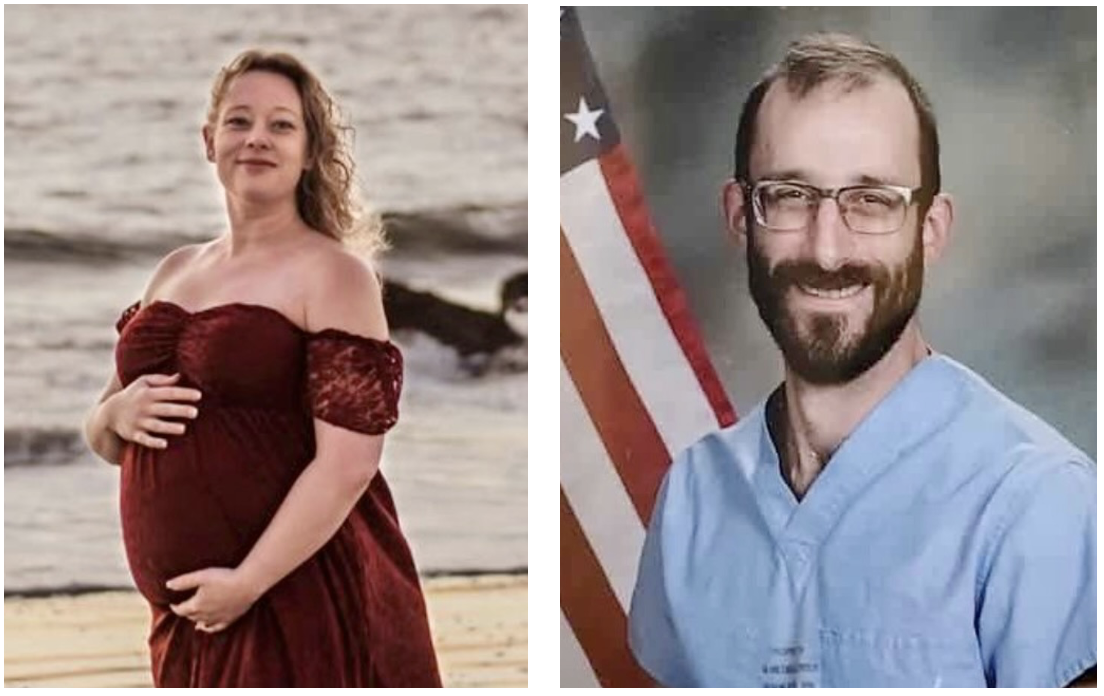
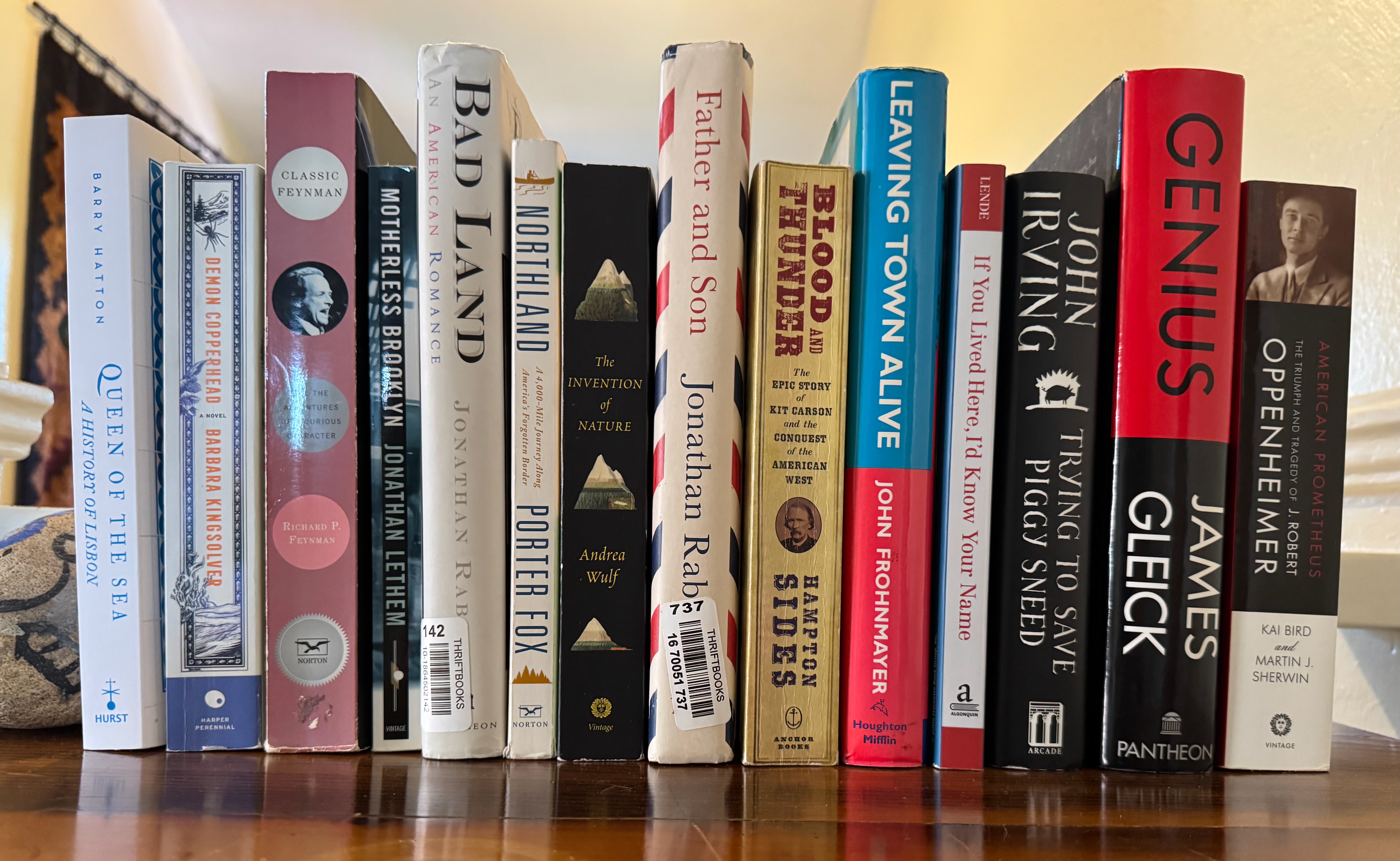
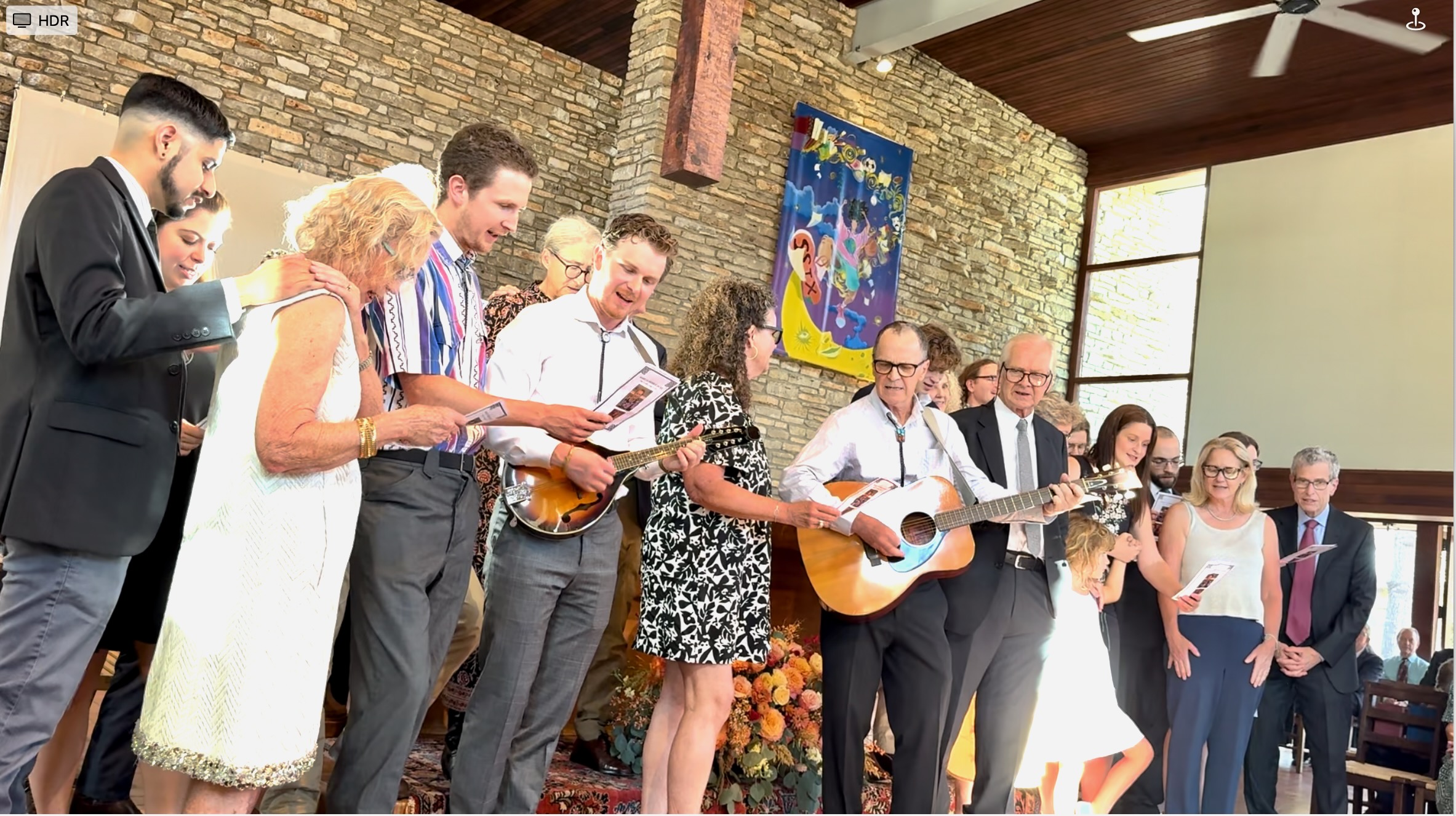
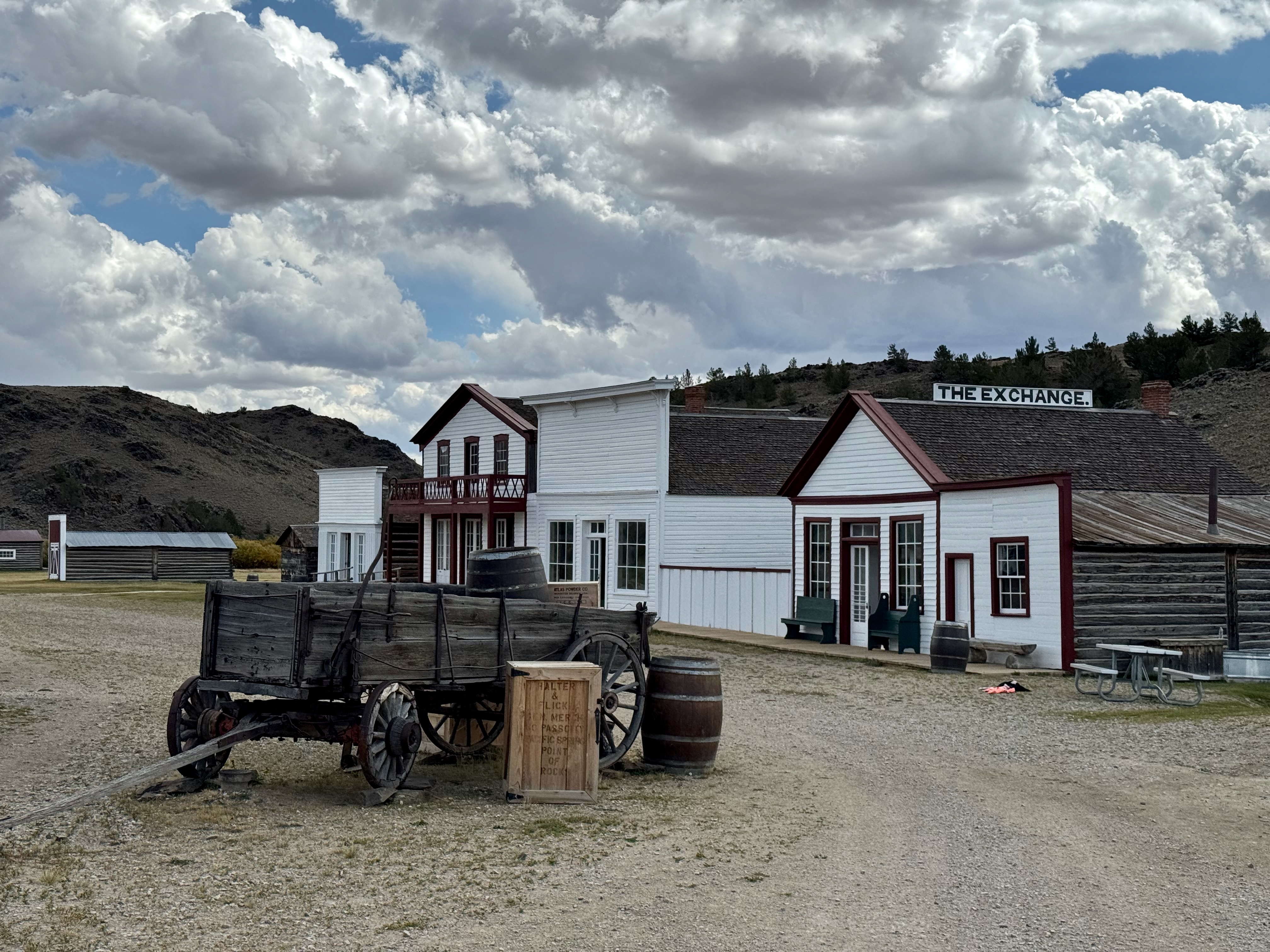




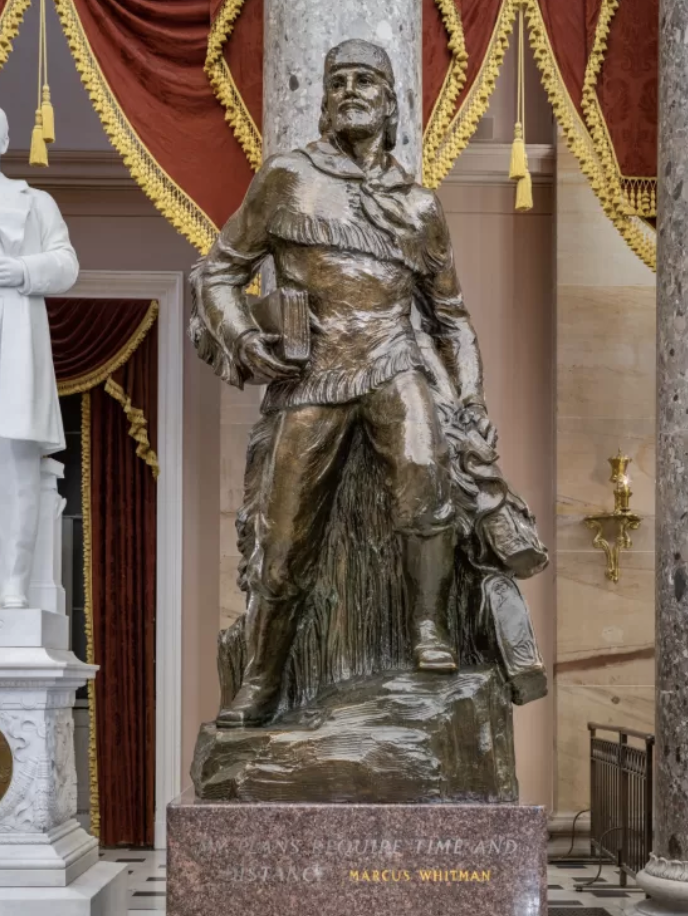
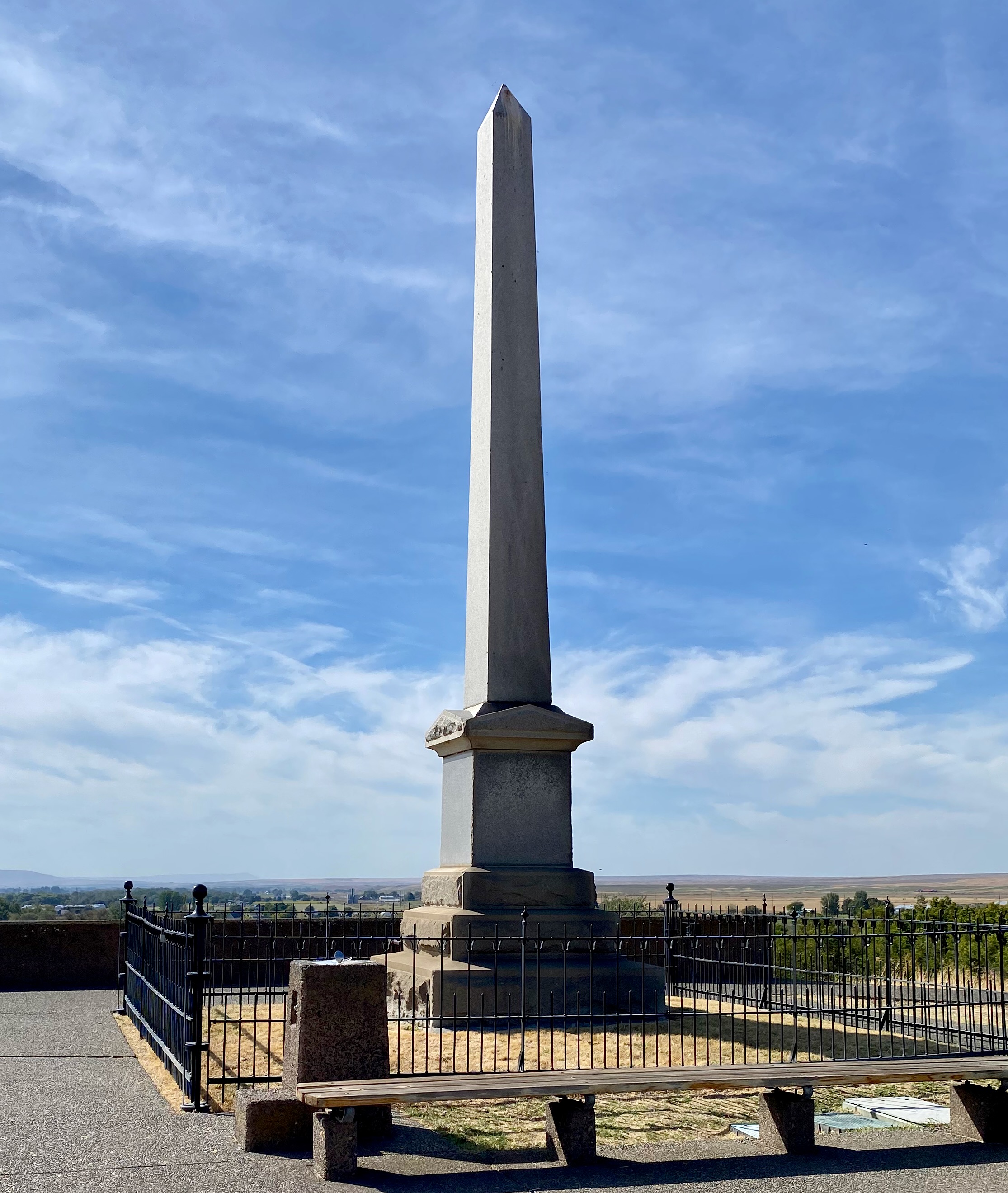

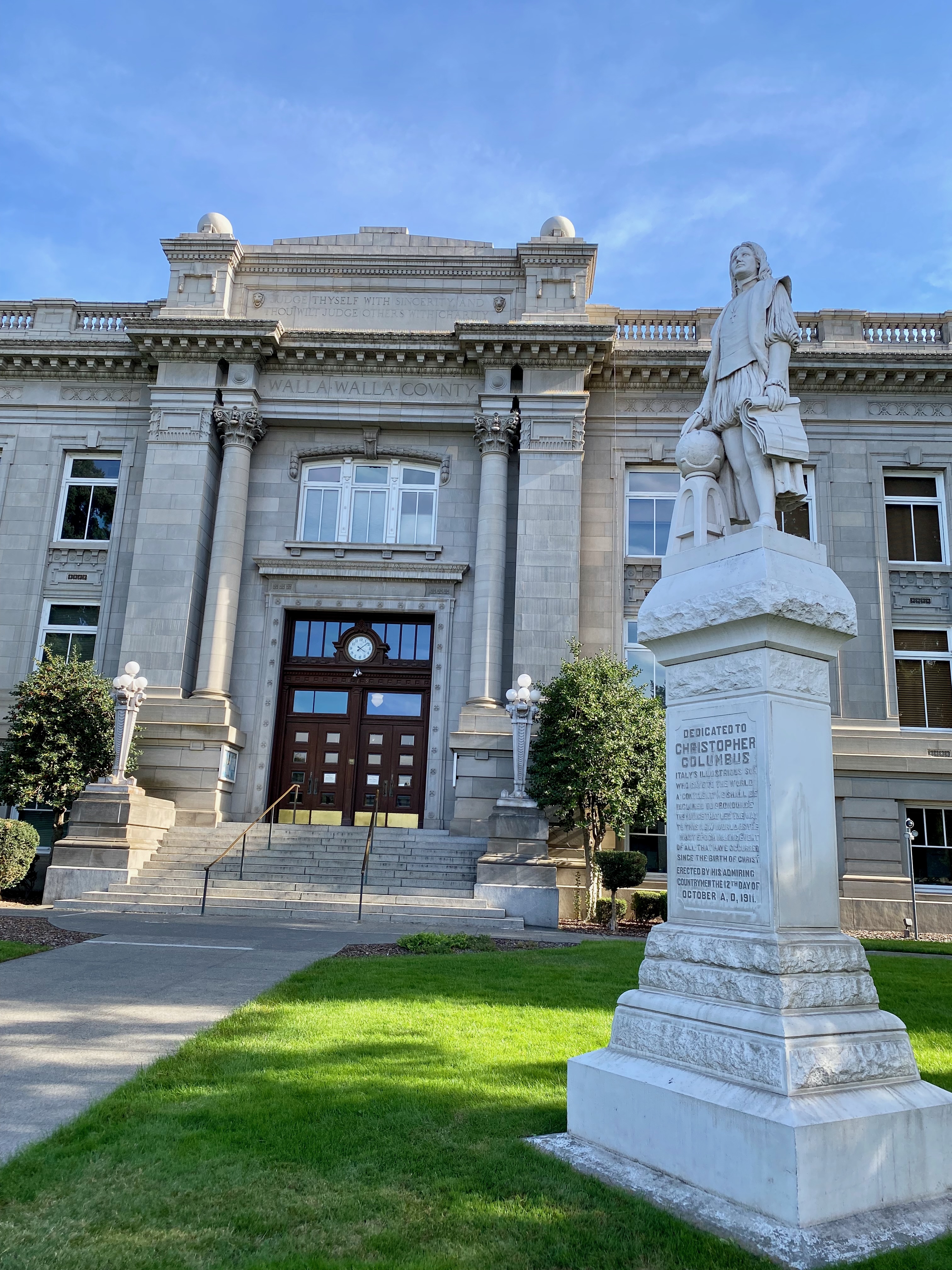

 Transformational Citizenship