
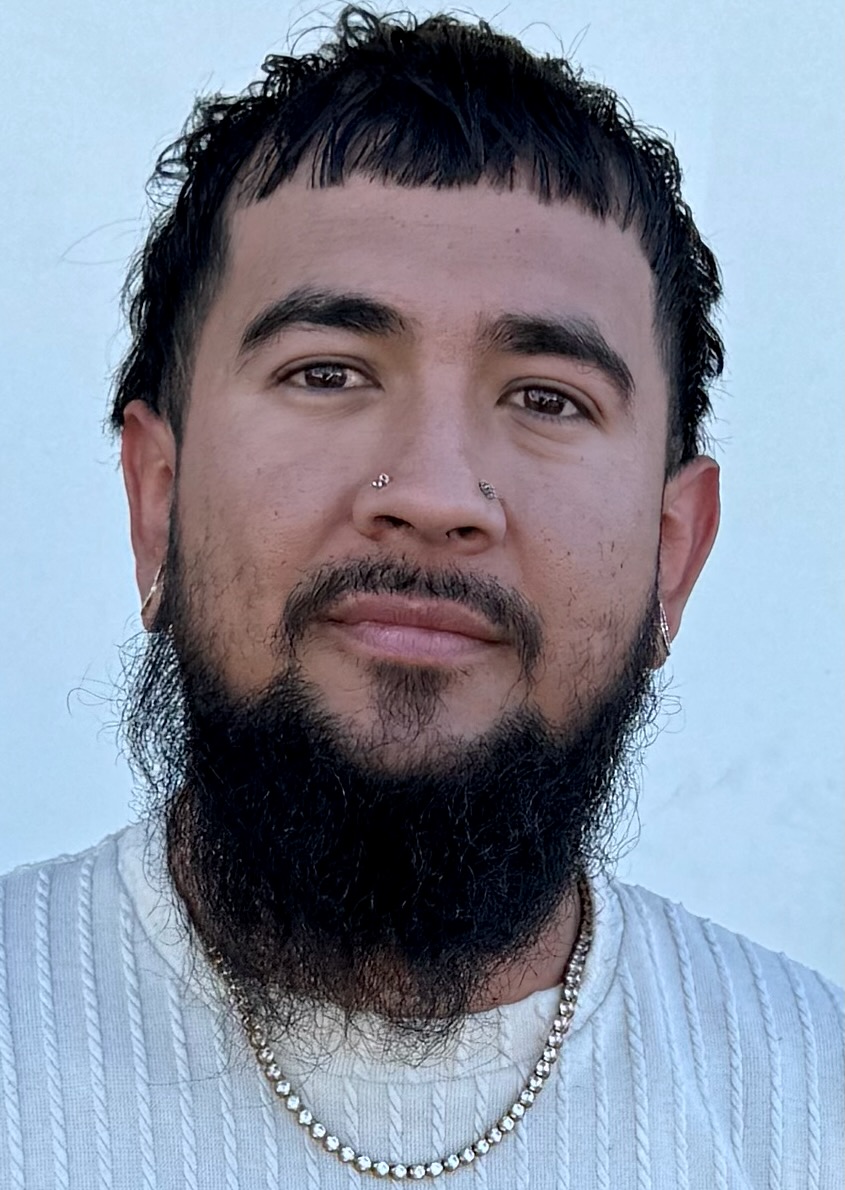
Alexis was sitting on the stoop. A 28-year-old registered Democrat, my data informed me, he affirmed he was voting the straight ticket. His English, through a Spanish accent, was flawless. I asked him where he was from. Southern Mexico. And what did he think about voting here? I cannot quote him, because my brain could not keep up with his eloquence. To paraphase:
Coming from the Third World, Alexis saw that rich people care about themselves, not about the multitudes who struggle to keep their families whole, and the privilege of voting indicates that everyone in the United States is entitled to a dignified place in society. I asked him why he was a Democrat. Because the Democrats, he said, care about ensuring that everyone has a chance to live with dignity.
For a moment I stared at him, speechless, then asked if he might canvass these final two weeks around his Las Vegas neighborhood. He had no free time, he said: A single father, he also cares for his brother, 25, who has Down’s Syndrome. I asked to take his picture, something I had not done in 12 days of walking door to door. He graciously obliged.
In the heat of the Portland summer, I had conceived this thousand-mile drive to Nevada in mid-October because it is the closest swing state, and I have the luxury of time and a place to stay, thanks to my friend Kathy (who walked with me my last four days). In the blazing heat where one out of five knocks answered is a spectacular result, I had no inkling I would learn so much from this cross-section of fellow occupants of my fair land. (I had forgotten similar travels in other election years.)
At the first door and every door thereafter, I took in the façade, the porch, the yard and what’s in it, the cars in front or in the driveway—or not. I absorbed details and judged before the door opened, or didn’t. When it did, the lesson began.
My canvassing targets, which I called up on my phone, were identified by a map, address and name according to Clark County’s voter rolls. Also age, gender, party: D, I, O (other), L (Libertarian), NP (non-partisan) or, rarely, R. (As in many states, a Nevada voter is registered by default at the DMV.) If she was registered and neither a Republican nor reliably voting Democrat, she was likely on my list.
From social media and TV, I’d think we’re on the edge of civil war, and maybe we are. But face to face, people are mostly respectful, civil, even kind, no matter my politics or theirs. Many said: Be safe, and they meant it. My paid supervisor Dave confessed that he’d been afraid on his first day canvassing. But after the first guy slams the door in your face and you’re still fine, you move on.
An hour into my first day, an elderly man with an auburn toupée opened the door. I introduced myself as a volunteer with Nevada Democrats and explained why I was there: to talk to his wife, who was on my list. “What the fuck are you doing?” He closed the door.
But at the first house an hour earlier, a woman in her late 20s holding a one-year-old told me her top issue was reproductive rights. Kristen had had an abortion after having been raped. “Trump scares me.” I suggested that hers was a new response to changed conditions: an open admission to a stranger about her life and her choice. Yes, she said, “Before I was ashamed, but not now. This is too important, and I want to protect my daughter and her future.”
On my last morning, Dana (Independent, 66) came round from the back and shooed us away. “I know who I’m voting for and I don’t need to talk about it.” Eight minutes into a conversation with a young trans woman kitty-corner to Dana’s house, I spied him sitting on the wall on the edge of his yard. When Kathy and I finished clarifying for Briteni the GOP campaign against “boys competing in girls’ sports,” Dana approached and apologized. “I’m a proud Reagan Republican,” he said, then expressed bewilderment at what’s happened to his party. He’ll be voting for Kamala Harris and the other Democrats.
Notes among other conversations:
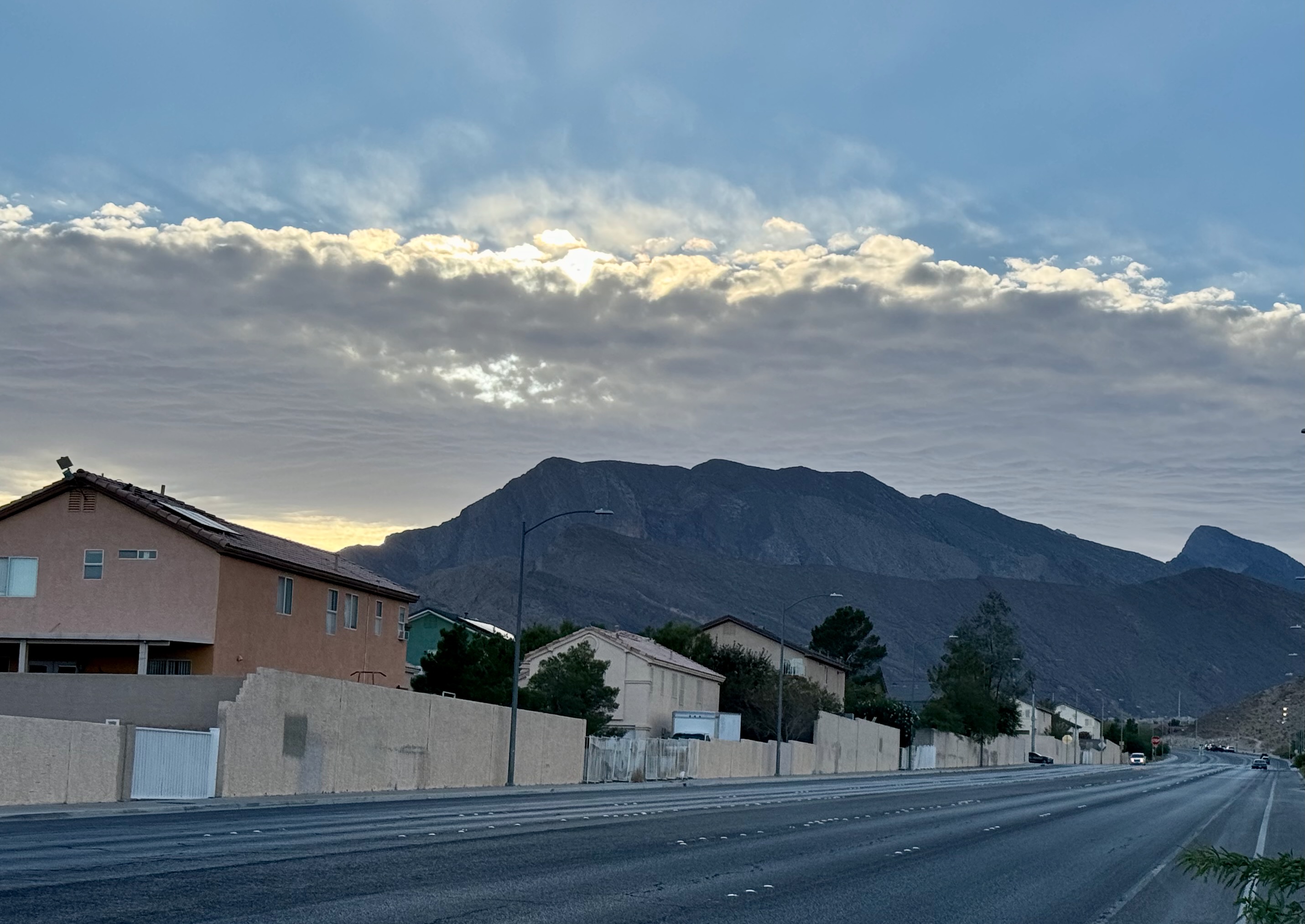
On my list: a 50-year-old woman (I) and a 20-year-old man (NP), on the edge of town, with La Madre Mountain looming just west. A middle-aged man answers the door. I say to him, You aren’t on our list, so you must be a Republican or a reliable Democrat, which is it? “Republican. I’m voting for Trump. My son is military. We’re all Republicans.” I inquire: Please if you would, tell me how someone serving his country supports a candidate who shows nothing but disrespect for your service? Robert comes out on the porch and goes in another direction. “I would just like someone who makes our country better,” an improvement on Biden. I ask, What is it about Biden that you’ve found disappointing? Pulling out his money clip, he says, “When Trump was president, this was a lot thicker.”
And so begins a 15-minute conversation as we rocket from subject to subject, and I find myself responding to his queries: about the so-called Trump tax cut, which House Republicans had been developing for years and which was financed by our grandchildren amid a robust economy, in which corporations had cash to burn; the inflationary effect of Congress pumping trillions into the collapsing Covid economy; the Inflation Reduction Act as an investment in domestic manufacturing, chip research, and green energy so that China won’t eat our lunch; Trump’s desire for border chaos rather than the solution Senate Republicans wrote; and the Biden record in confronting monopolies, such as the Albertson’s-Kroger proposed merger.
A golf course manager, Robert hates that any Colorado River water flows into the Pacific. He wants more dams and he and blames Gavin Newsom for California taking his water—though he knows it comes from snow in the Rockies. So we talk about the Colorado Compact, but I refrain from suggesting he read Marc Reisner’s Cadillac Desert, about the federal Bureau of Reclamation that made Las Vegas, Phoenix and L.A. possible; or Wallace Stegner’s Beyond the Hundredth Meridian, about the nature of the West; or Russell Martin’s A Story That Stands Like A Dam, about the flooding of Glen Canyon. All three describe how we turned a desert into Robert’s golf course.
My impression of Robert is of a genial guy who expects the president to address his issues in a way that makes sense to him but without considering its ramifications. Perhaps this is the appeal of a businessman in politics: Business owners get stuff done. They don’t think about what it means for anyone else. But politics is about devising solutions that work for the commonweal. In our scarcity, represented by a shrunken money clip, considerations of others take a back seat.
Charlotte is a registered Independent, 57. When she opens the door—which is a good thing, considering the day so far—she is scowling. I introduced myself, that I am with Nevada Democrats. She says nothing. I say, I’m canvassing for Kamala Harris. “Happy to hear it.” And Senator Jacky Rosen. “I’m doubly happy to hear it.” And Congressman Steven Horsford. She smiles. “Triply happy to hear it.” We launch into pitter-patter. I have what I need, but I’m standing in the shade on a hot day, so I tell Charlotte about my experience in her neighborhood, she tells me about hers. “Don’t move for one minute,” she commands and walks away, returning with cold water in a glass bottle.
An obese, shirtless man with dimes in his earlobes, late 20s, opens the door. My target, his wife or significant other, an Independent, isn’t home. You’re not on my list, I note. “I’ve never voted. I’m not interested in politics.” May I give my pitch? He comes out on the porch. I ask him what’s important to him. “I don’t really think about it.” Okay, what do you do for a living? Cesar warms to the conversation. Look, I say, this matters. After all, you’re paying my Social Security. You can register and vote at the same time, starting in three days; here’s where to vote. C’mon man, this is your opportunity to tell your government what you think. He smiles, “Okay, yeah, I’ll do it.”
Across the street, two guys are talking. One a tradesman, White, the other the resident, Black. I’m looking for a woman, who turns out to be his landlord, who had moved out and he had moved in. “I’m not registered,” LeBaron says. “I haven’t voted since Bill Clinton, when I was 23.” Similar conversation, only LeBaron sketches his values, like ensuring everyone has an opportunity to succeed, that government should help hungry, homeless people. I tell him my background: reporter in New York 40 years ago, when Donald Trump was an up-and-coming mobster ripping off his construction contractors like a Scorsese character; then I moved to D.C. and for the next three decades described for my clients the battle between Republicans and Democrats, how Republicans have fought to dismantle government and that Trump’s allies are intent on it. “Everything you’ve said, LeBaron, you’re a Democrat! It’s time to use your voice again so we can send Trump to Siberia.” He laughs and promises to register.
James, a 35-year-old Libertarian, opens the door and comes out on the porch. “Unfortunately I’m for Trump.” Unfortunately? “Well, unfortunately for you.” James says the economy was better under Trump. I say, The president has no short-term effect on the economy. He agrees. I say, We have had inflation because Congress, under Trump and then Biden, injected trillions into the economy over a short period, and too much money chasing too few goods equals inflation. He agrees. I say, The Fed controls the money supply and short-term rates, which in turn dials the economy up and down. He agrees, then says the Fed should have raised rates higher, and anyway it should be abolished because it doesn’t perform any better than did the business cycle on its own in the 19th century. I think better of this route, how in the Panic of 1907, after which J.P. Morgan tired of bailing out the nation’s failing banks and vicious business cycles, he orchestrated Congress’s creation of the Federal Reserve. Instead I bring up January 6. That was overblown, James says. No cops died that day; Officer Brian Sicknick died two days later, maybe from something else. The only death that day was of unarmed Ashli Babbit, who was shot by the police. The conversation ceased to be fun so I say, You’re a great American, thank you for taking the time, and depart.
At a three-generation, six-person house of D, I and NP, a young man, 25 and unregistered, answers the door. He has never voted and isn’t inclined. He has no interest in politics or what matters in the election. So I pitch him, ending with: It’s your future we’re voting on, not mine; I’ll be dead soon. He says his grandparents, Democrats, want him to accompany them to the polling place, so maybe he’ll register while he’s there.
The lowlight of the sixth day—except that every conversation with another citizen is interesting—is a 54-year-old Democrat who insists Biden/Harris has done nothing for us and will give the other candidate (the worst human being ever to occupy the White House, he agrees) another chance. We discuss our views passionately for 20 minutes, I seem to get nowhere, and shake his hand.
The highlight is two blocks east, where I’d knocked on the door of a 65-year-old female Democrat. No answer. When I walk around the corner, I hear a radio blaring from the garage with a door two-thirds closed. I bend down and call HALLO! to a man sitting in a folding chair next to his car. He folds himself under the door: an unregistered 67-year-old son of a Philippine army officer during the Ferdinand Marcos era who’d come to the U.S. in 1979. (Seven years earlier, Marcos had declared martial law; in 1981 I witnessed Vice President Bush tell a graduating class at my college how proud we were of Marcos’s “respect for democracy.”) Ricardo complains about all the “illegals” sucking off the government. I say those people are paying his Social Security checks. “No, I earned that!” Yes, but that money is gone, it paid for your parents’ benefits, and those undocumented workers are now paying yours because our kids aren’t having enough children. After a pause, he brightens and declares he will vote straight Democratic. “Are you hungry? Would you like some salad?”
A 50-something, bullet-headed man is sitting in a chair in the shade of his front yard. He’s not on my list. I’m looking for his son, 25, NP. “You don’t want to talk to me,” the man says, going inside to retrieve the boy, who comes to the side gate. He’s never voted and doesn’t intend to. Instead he wants to talk about Christianity. So we open with the Bible and his idea of a Christian society, in which the family is paramount. I ask Jorge: Are you familiar with the Veil of Ignorance? Yes, he says, though it emerges he has no clue about philosopher John Rawls’s question: What kind of society would you design if you had no idea under what circumstances you would be born? He asks me to repeat the scenario, and ponders, but never answers. I suggest we review the preamble to the Constitution and bring it up on my phone. We stand in silence, reading. The conversation lasts 25 minutes. I can’t bring Jorge to my candidate, but I think he might vote, which is a privilege he has so far ignored.
At the top of a cul-de-sac, in a front yard draped with Trump signs, a man in his 70s says his wife, the Independent on our list, isn’t home. We engage in chit-chat about the cars in his driveway he has restored. He pleasantly points to the other houses in sight whose residents also support Trump. At our next house, three doors away, lives Mark, 30, Independent. He stands in his doorway and peppers Kathy and me with questions for 15 minutes, then says, “Kamala is an anchor baby. Aren’t you concerned about anchor babies?” I am so programmed to enroll people whose views repel me that I don’t instantly turn away, waiting until Mark’s friend pulls up in a mammoth pickup and he says he has to go. I shake his hand, only later mulling how I didn’t say, Got it, you racist POS.
A very elderly woman wrapped in a shawl—fall had arrived on my tenth morning with a 40-degree temperature drop—opens the door. Kathy and I are in search of four people on our voter list, none of them her age. “Straight Republican!” she shouts, when she finally perceives that we are canvassing for the Democrats. We try to get clear who lives there—two of the four, she says—and closes the door.
Two hours later, we return to the same unit from our loop in the garden complex. The garage door is open, and a young woman and a couple with an infant are standing around a 20-year-old Mazda sedan. Victoria, 23 and on our list, tells us her sister and brother-in-law have just been evicted for non-payment, and so they are back home. The couple, whose names we do not get, appear to be in a daze. They had dropped off some things and now they drive away. Victoria says she herself is a Kamala voter; control of her body is paramount. At Victoria’s invitation we approach the garage, where her mom had waved at us.
Jennifer, 44, an attractive bleached blonde with heavy foundation, is on our list. She accepts our invitation to chat. Her issues: the economy and the border, over which untold numbers are flowing with government assistance of $15,000 each. Her source: Fox News, which her mother, whom we had met earlier, blasts throughout the house all day.
So we talk about the border, and Trump’s killing of the GOP-written border bill (she knew nothing about that). And the philosophy she was force-fed in her house. Also participating: Serenity, 17, who tells us that a Tik-Tok video informed her that the government controlled the weather. So we speak of many things: the aims of the two parties, the limitations of the president’s authority, the interactions of the three branches that have stymied Biden’s efforts to give a shake to Jennifer’s family, which she tells us is poor (a word I’d not heard from anyone who spoke to me, though for many it fit). We outline a few of the aims of Project 2025: eliminating the Department of Education, the Weather Service, FEMA, etc.
The light dawns in Jennifer’s eyes. As often happens, she seems impressed that a person who appears to know facts stands before her and has asked what she thinks. But then she wants to know whether we believe 9/11 was an inside job—another rabbit hole about which I’d rather not speculate, except to suggest that an airplane filled with gasoline that flies through a skyscraper offers a demonstration of gravitational pull. As for Serenity and her TikTok, her discernment perhaps results, as a public school teacher had put it to me, from diverting education funding to the construction of a stadium for the Las Vegas Raiders.
Which brings me back to the profile of the 1,261 registered voters on my lists. A strong plurality was under 30 and NP. Those surveys about how young people can’t identify the three branches of government? They’re here. They grew up in a city whose leaders care less about education and more about the Raiders and A’s.
Which suggests this democratic experiment may have run its course. A Kamala victory would delay the end for a few years. Like everywhere on this warming planet, Las Vegas is living on borrowed time, a grid of asphalt connecting strip malls with subdivisions. The view of the mountains on three sides is stunning from highways elevated above the sand. Its population flow includes thousands from greater LA who took their equity and bought new houses for cash. Like every other Southwest civilization in this stretch from the Rockies to the Sierras and on to Los Angeles, it has relied on diverted water. As Marc Reisner explained, when the salts deposited by irrigation concentrate, the water will be unusable.
Las Vegas is a metaphor for the end of empire: service workers and the circuses that employ them. When the golf courses turn brown and the taps run dry, we won’t ask what we did to put us here. We’ll turn to a demagogue who’ll promise he alone can fix it.
Yet I keep knocking on doors. For my kids, and Alexis.
 Transformational Citizenship