‘American Sniper’ and the illusion of separation

Two scenes struck me in “American Sniper.” If you’ve been hiding under a rock or are otherwise unaware of the Oscars, the movie is a biopic based on the best-selling memoir of Chris Kyle, a Navy SEAL and Iraq War veteran who was killed two years ago by a troubled Marine vet whom Kyle was trying to help readjust to civilian life.

In the first scene, Kyle (Bradley Cooper) gets a call on his satellite phone from his wife Taya, who while walking out of her obstetrician’s office tells him their first baby will be a boy. Kyle is riding in a convoy in Iraq that comes under fire, and he drops the phone on the ground as he scrambles out of the truck. Taya is shown in medium shot that moves in, as she hears nothing over the phone but the gun battle. She is in meltdown, yelling into the phone, connected to the war but not to her husband. The camera pulls back, and behind Taya people go in an out of the office building. They either don’t notice a very pregnant woman in distress, or they choose not to.

In the second scene, about five years later, Kyle is at an auto repair shop with his son. He signs the work order, the camera at medium shot so we take in the clerk, the waiting room, other customers. Kyle offers his son a lesson about the mechanics of a gumball machine. In close-up, a man introduces himself and explains that Kyle had saved his life in Iraq. He bends down and tells the boy his dad is a hero, that he is alive and has a two-year-old daughter because of him. The man stands and salutes. Kyle is stiff and uncomfortable, unable to acknowledge the praise. Behind the man, two customers, slightly out of focus, read magazines. They either don’t notice an unusual conversation, or they choose not to.

I have no idea what director Clint Eastwood intended in the way he shot those scenes. My interpretation is that we are routinely unaware of what is happening in front of us. The reality is that we are connected, and in the case of “American Sniper,” to a war in which only a tiny fraction of us had direct experience.

The ripples of Kyle’s life and death will play out over a long time. Because of one war in Iraq, we are in another, labeled ISIS, that has metastasized across the Middle East and beyond. We are inextricably tied to each other, to events on the other side of the world, to fellow customers in a repair shop.

Posted in Uncategorized, War | Tagged , , , , , , | 1 Comment

Gerrymandering: Politics as situational ethics?

The state senator had an appointment out of town, and all his colleagues knew it. As soon as he left, the other political party, exploiting its temporary one-seat advantage, rushed to the floor a new legislative district map, though the state had adopted a compromise following the decennial census nine months before. The new map, the other party believed, would assure it a solid majority beyond the decade. The senate passed it, on party lines, in 30 minutes.

Situational ethics: Who’s right? Was there a wrong?
The_Gerry-Mander_Edit

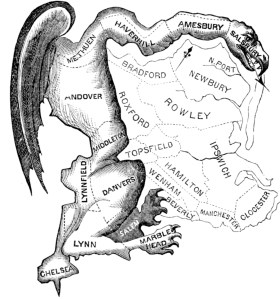
The “Gerry-Mander” by Elkanah Tisdale (1771-1835), in the Boston Centennial, 1812

The story is real. The senator was Henry L. Marsh, a Democrat in Richmond. Marsh’s appointment was in Washington, at Barack Obama’s second inauguration. The Virginia Senate was split 20-20, and the previous April it had hashed out a Senate map with Republican Governor Bob McDonnell. The elected attorney general, Republican Ken Cuccinelli, set to back the new plan, was gearing up to run for governor. Amid the uproar, however, the House speaker, Republican William J. Howell, killed the proposal on a parliamentary maneuver. Said Howell, “I am committed to upholding the honor and traditions of both the office of speaker, the institution as a whole and the Commonwealth of Virginia.”

Gerrymandering also has a long tradition, but its increasingly aggressive use, thanks to computer-generated voter data, is distorting our elections, diminishing our representation, discouraging voting, and feeding legislative gridlock. It is an opportunity to jam the other side in this 50-50 political era – not the cause but rather an effect of growing intolerance of views and priorities with which we, any of us, disagree.

State legislatures are splitting cities, towns, even voting precincts to maximize party control. The state houses in Raleigh, Columbus, Harrisburg and Tallahassee contend for the title; Richmond also shows prowess for the increasingly purple Commonwealth of Virginia.

The Democrat won the past two presidential and four U.S. Senate elections in the Old Dominion. Democrats swept statewide posts (governor, lieutenant governor, attorney general) in 2013, breaking a 40-year streak in which the White House’s party lost the governor’s mansion the following year.

In the Virginia Senate, Republicans hold a 21-19 majority (after a 2014 special election in which Democrats lost a seat). That slender divide may be a fair representation of the whole state – it’s hard to say, since Virginia voters do not register by party. But in the House of Delegates, the GOP has a 67-32 majority (with one independent). The U.S. House delegation is Republican, 8-3. What’s going on here?

First, a trend. The New Deal Coalition, in which rural whites tended to be Democrats, is (literally) dead. In Virginia as in some other states, many of their children left for the cities; those that remain tend to vote Republican.

Second, the Great Sorting. Democratic majorities tend to be concentrated in cities and close-in suburbs; they are dark blue. Exurbs and rural areas tend to be pink, though on two-color maps they are red. It’s challenging to spread Democratic voters beyond geographically compact districts. But as legislators know, the same skill they have applied to splitting precincts could be applied to creating representative maps.

Thus the third factor: gerrymandering. Of course partisans want to win, and the Constitution imposes few limits on redistricting. But gerrymandering counters the spirit of the Framers, who sought to counter what Madison called, in Federalist No. 10, the “mortal disease” of faction:

“Complaints are everywhere heard . . . that the public good is disregarded in the conflicts of rival parties, and that measures are too often decided, not according to the rules of justice and the rights of the minor party, but by the superior force of an interested and overbearing majority.”

What does an “overbearing majority” look like? Virginia’s Senate caper. And its House of Delegates elections.

In 2013, 52 of the 100 House winners were either unopposed or had no major-party opponent; another 23 won with at least 60 percent of the vote. Thus voters in three-fourths of the districts had no real choice. And they get it: Voter turnout in state elections (which is easy to measure, as elections occur in odd-numbered years, opposite federal) has declined by half over the past 30 years.

An advisory ethics panel appointed by Democratic Governor Terry McAuliffe issued recommendations in December, among them a non-partisan commission created under a constitutional amendment to draw state and congressional districts. The ethics panel, chaired by former Democratic congressman Rick Boucher and former Republican lieutenant governor Bill Bolling (who was presiding when the GOP pulled its Senate maneuver), explained its reasoning:

When politicians choose who[m] they will represent, rather than being chosen by their constituents, that decision is based predominantly on personal political preservation and enhancing the number of districts represented by the party that controls the redistricting process. Gerrymandering is a self-evident conflict of interests, inherently undemocratic and a disservice to the communities and people of the Commonwealth.”

Speaker Howell dismissed the proposal. His House has declined to act on similar bills.

Virginia

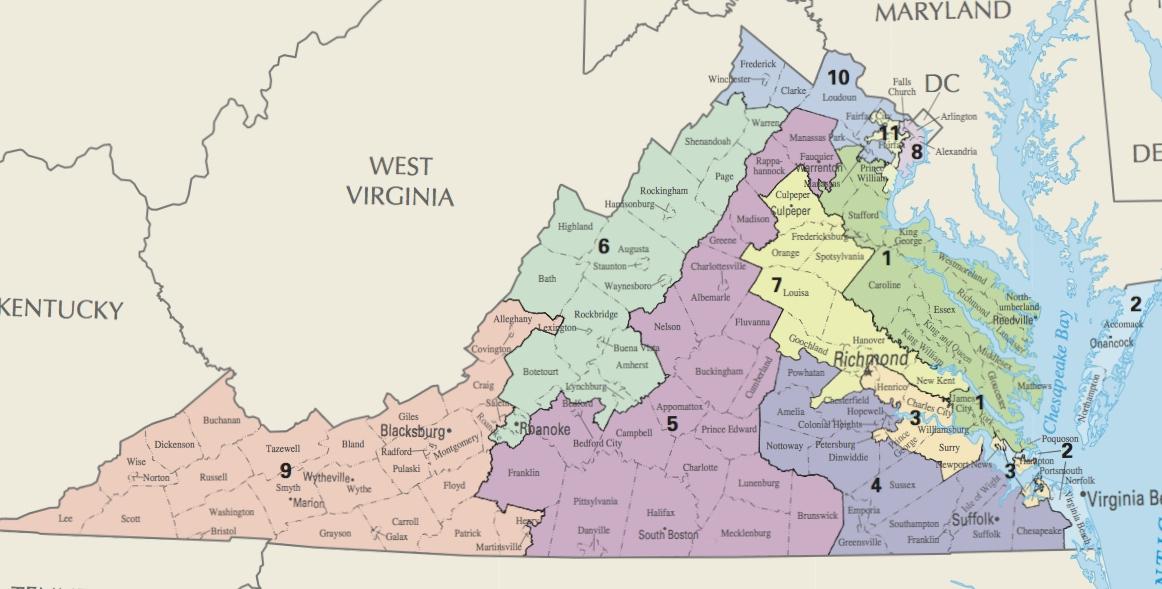
Virginia’s 2012 congressional districts (U.S. Department of the Interior)

Meanwhile, the General Assembly’s 2012 map of the state’s congressional districts was found in violation of federal voting rights law. A federal district court determined that the map packed black voters into the Third District, reducing their influence in adjacent districts and diminishing minority representation overall. The Assembly was ordered to draw a new map this year.

The state House and Senate maps, with 100 and 40 districts, are hard to decipher. The U.S. House map, with 11 districts, is easy. What’s with the 5th, stretching its middle finger from North Carolina to Loudoun County, 175 miles north? Or the 10th, which runs from the toniest suburbs of Washington over several Appalachian ridges to West Virginia?

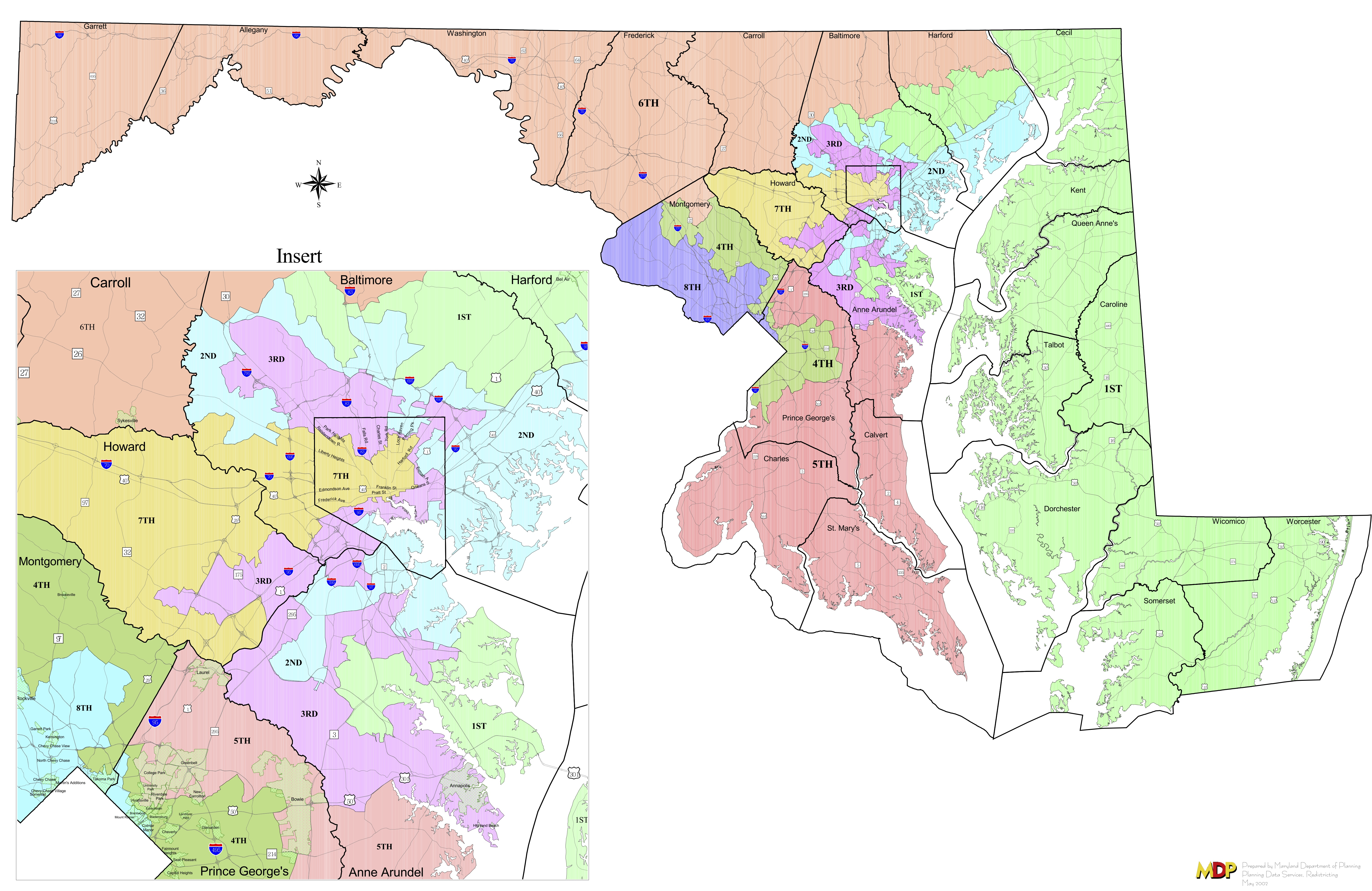
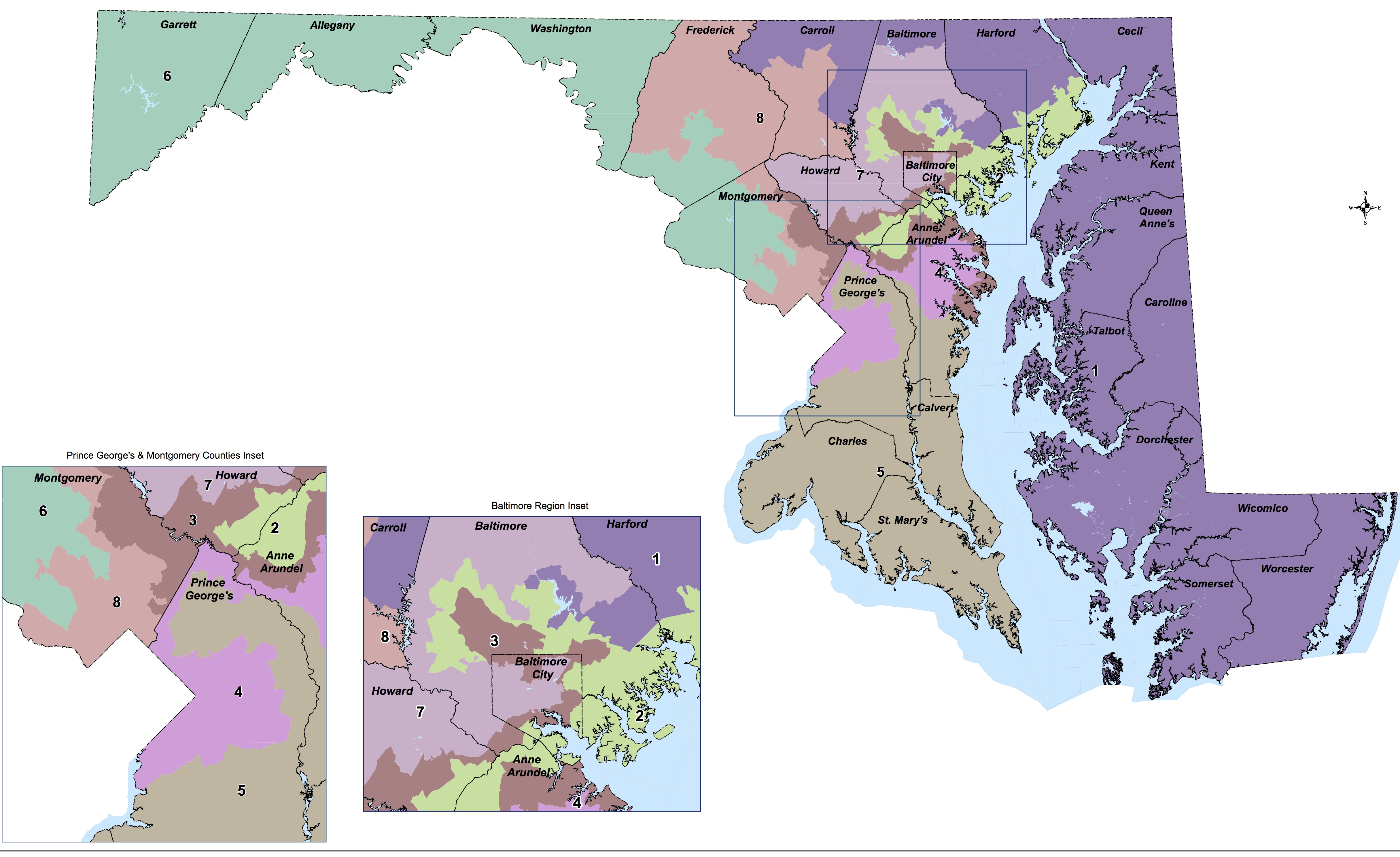
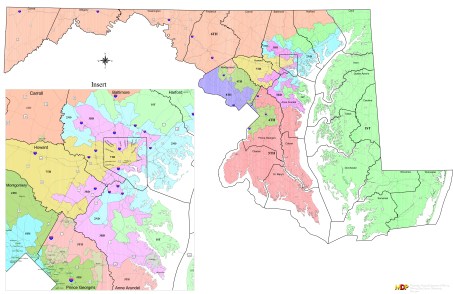
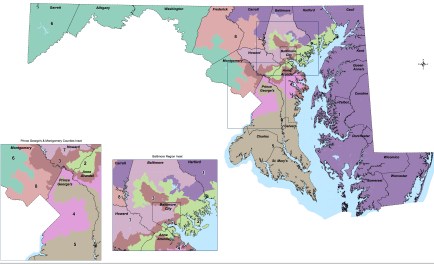
I whack on Virginia because I’ve resided in it for 50 years. Of course the GOP isn’t alone. Across the Potomac, the overwhelmingly Democratic legislature in Annapolis produced a near mirror of Virginia’s 10th in Maryland’s 6th District, in hopes of picking off an incumbent Republican in 2012. (After Democrats targeted 10-term Rep. Roscoe Bartlett, some sniped at House Minority Leader Nancy Pelosi for inviting the Republican to sit with her at the 2011 State of the Union Address.) The 6th, after the 2000 census, ran from West Virginia under the Pennsylvania border to the Susquehanna River. Ten years later, the Democrats sacrificed the competitive 1st District on the Eastern Shore, ensuring it would stay Republican, and drew the 6th deep into D.C.’s liberal suburbs. It worked. Maryland’s U.S. House delegation went from 6-2 Democratic to 7-1, at the expense of Democrats on the Eastern Shore and Republicans in the mountains.
Maryland 2002

Maryland’s 2002 congressional map. The 6th District is orange; the 1st is green. (Maryland Department of Planning)
Maryland 2012

The 2012 map: the 6th District is green; the 1st is purple.

In a polarized era, characterized by our disdain for those who think another way, gerrymandering is a weapon. Maryland’s voter registration is 68 percent Democratic – less than a U.S. House delegation of 6-2, much less than 7-1. (Despite party registration, Maryland elected a GOP governor in 2014 and 2002.) But the Virginia GOP’s lock on the state and federal lower houses distorts the commonwealth’s political complexion. It does not represent us. 

Voters elsewhere are fighting back. In some states, including California and Florida, they have passed ballot initiatives affecting redistricting. Some have created appointed commissions to draw districts (like that recommended in Virginia). In Arizona, voters in 2000 passed an initiative to amend the state constitution to vest the drawing of congressional districts in an Independent Redistricting Commission (IRC).

The IRC drew the map in 2001. But after its second round in 2012, the legislature struck back, suing in federal court that the commission usurped the legislature’s authority under Article I section 4 (the Elections Clause): “The Times, Places and Manner of holding Elections for Senators and Representatives, shall be prescribed in each State by the Legislature thereof.” The court upheld the commission: “In Arizona the lawmaking power plainly includes the power to enact laws through initiative, and thus the Elections Clause permits the establishment and use of the IRC.”

The Supreme Court accepted the legislature’s appeal on two questions: whether the Elections Clause and federal law permit Arizona to use a commission to map congressional districts, and whether the legislature has standing to bring the suit. Oral argument is scheduled for March 2.

According to the Brennan Center, the decision in Arizona Legislature v. Arizona Independent Redistricting Commission could invalidate congressional redistricting commissions in half a dozen states and also throw into doubt the tie-breaking procedures used in four states to resolve legislative deadlocks.

Let me get this straight. The Arizona legislature didn’t like the result of a ballot initiative, so it took its constituents to court. What do you think?

Posted in gerrymandering, James Madison, U.S. Constitution | Tagged , , , , , , , , , , , | Comments Off on Gerrymandering: Politics as situational ethics?

Abraham Lincoln and the purpose of government

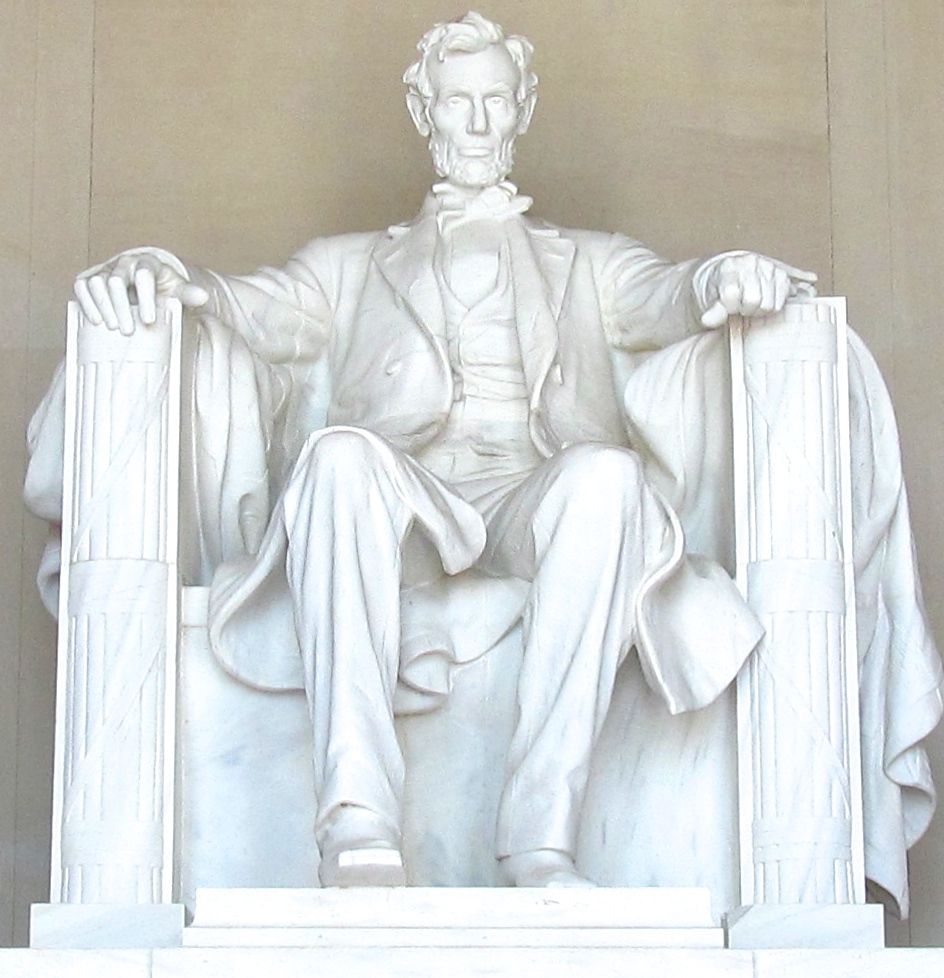
Abraham Lincoln was born 206 years ago today. Enshrined as our greatest president, he spent his three-decade political career writing and speaking about the framers’ intention, four score and seven years later.

IMG_2674This week I visited the Ford’s Theatre Lincoln Center, which several years ago installed an aluminum sculpture representing 6,800 of the more than 15,000 books that have been written about the 16th president. A plaque in front of the 34-foot tower notes that the last word will never be written, because each generation reinterprets the man and his time in light of its own.

To me, Lincoln transformed the union from a collection of states into a nation, rededicated to the proposition that all men are created equal. His leadership led to the 13th Amendment in his lifetime and the 14th and 15th soon after, all three repairing flaws in the original. The 1860 Republican Party platform advocated federally supported infrastructure, including a nationwide postal service, “river and harbor improvements,” and a transcontinental railroad (our version of the Internet, airports, highways, mass transit). In myriad ways, assisted by the technological revolution that accompanied the Civil War, Lincoln expanded the reach of government.

But what is its purpose?

To execute a social compact – which is whatever we decide it is. We inherit the agreement and alter it, radically (in Lincoln’s time) or incrementally (perhaps, or perhaps not, in ours).

We were born in – or immigrated to – a country under capitalism, “an economic system characterized by private or corporate ownership of capital goods, by investments that are determined by private decision, and by prices, production, and the distribution of goods that are determined mainly by competition in a free market” (Miriam-Webster). That is to say, private enterprise fosters the creation of wealth for its creators. In that respect, it has been a fantastic success, and it has resulted in goods and services our grandparents could not have imagined.

Instruments of government frame our economic system. By the Declaration of Independence, the purpose of government is to “effect [the people’s] safety and happiness.” In the preamble to the Constitution, government is to “establish Justice, insure domestic Tranquility, provide for the common defense, promote the general Welfare, and secure the Blessings of Liberty to ourselves and our Posterity.”

In the first 2012 presidential debate, moderator Jim Lehrer asked the candidates to describe the “fundamental difference” between their views of the government’s mission.

President Obama said that its first role “is to keep the American people safe.” He added that it “has the capacity to help open up opportunity and create . . . frameworks where the American people can succeed.

“The genius of America is the free enterprise system and freedom and the fact that people can go out there and start a business, work on an idea, make their own decisions,” the president continued. “But as Abraham Lincoln understood, there are also some things we do better together. So, in the middle of the Civil War, Abraham Lincoln said, let’s help to finance the transcontinental railroad, let’s start the National Academy of Sciences, let’s start land grant colleges . . . because if all Americans are getting opportunity, we’re all going to be better off. That doesn’t restrict people’s freedom. That enhances it.” Obama defended his education initiatives, including the hiring of more teachers. “Governor Romney doesn’t think we need more teachers. I do, because I think that that is the kind of investment where the federal government can help.”

After defending Massachusetts schools and teachers, Romney said, “We have a responsibility to protect the lives and liberties of our people, and that means a military second to none.” He noted our “commitment to religious tolerance and freedom.” Referring to Jefferson’s right to pursue happiness, he said, “I interpret that as, one, making sure that those people who are less fortunate and can’t care for themselves are cared [for] by one another.”

He continued, “But we also believe in maintaining for individuals the right to pursue their dreams and not to have the government substitute itself for the rights of free individuals. And what we’re seeing right now is, in my view, a trickle-down government approach, which has government thinking it can do a better job than free people pursuing their dreams. And it’s not working.” As evidence he cited unemployment and poverty statistics.

So it goes in a campaign, when a debate moderator asks adversaries to stress their differences. Stripped of the attacks, both men would probably agree that:

Our government establishes a social compact under law, rather than under whim. The elements include: enforcing contracts and rules of commerce, and performing functions that are intrinsically public (because they are unprofitable or potentially pervert the public interest if performed by private parties). Among those functions are policing, waging war, providing universal education, owning infrastructure, and maintaining a social safety net.

They also would agree that over two-and-a-half centuries, as commercial instruments and society generally have become more complicated and nuanced, so too have our laws. Their complexity reflects the balancing of competing interests.

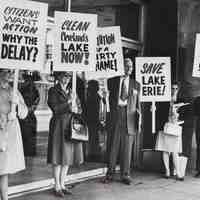
Cleveland State University Center for Public History + Digital Humanities

Cleveland State University Center for Public History + Digital Humanities

Take, for example, one of the most contentious battles on Capitol Hill: the EPA’s effort to curb pollution through regulatory initiatives that have waxed and waned since its founding in 1970. A month after the first “Earth Day,” in which 20 million Americans participated, a White House advisory council urged President Nixon to create the agency:

“Pollution is essentially a by-product of our vastly increased per capita consumption, intensified by population growth, urbanization, and changing industrial processes. In the coming years, problems of environmental degradation will rise exponentially.”

Inspired by Rachel Carson’s Silent Spring and other reports of environmental degradation, we resolved to curtail this “externality” of profitable production. Four decades later, the battle intensifies over who pays for pollution – all those affected (downwind, downstream, and the general population), or the private interests (and their customers) that create it.

The regulatory process itself has no right or wrong. One person’s “excessive regulation” is another’s justified response. There are pressure points: the president; the EPA, through the public-comment process; the courts, which weigh whether the agency has acted lawfully (the Supreme Court has repeatedly upheld EPA’s authority to regulate greenhouse gasses); and Congress, which oversees the agency and controls its purse. Right now, Obama is pursuing an agenda, and congressional Republicans aim to stop him. We, acting as citizens, decide what’s right and wrong and ultimately control the result. We are all “values” voters.

One hundred fifty years ago, we decided slavery was wrong and elected a president who was determined to save the union and, once the war was on, destroy slavery. More than 600,000 people – one in 50 of the whole population – died settling the question. Since then we have resorted to less violent means of sorting right from wrong. May we continue to do so.


Posted in Abraham Lincoln, U.S. Constitution | Tagged , , , , , , , , , , , , , | 2 Comments