
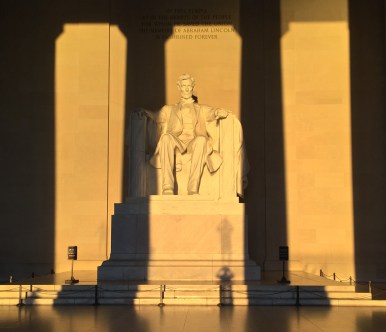
 If Donald Trump asked me what he should consider in composing his most consequential address yet, I would advise him to go read the two greatest speeches in American history, which are conveniently inscribed on the walls of the Lincoln Memorial, behind an enormous stage that’s been erected there in his honor. I visit often, especially since November, to deepen my perspective on where we are in this continuing experiment.
On the Memorial’s south wall is the Gettysburg Address, which if Steven Spielberg is to be believed every Union soldier memorized. The president delivered it in November 1863, four months after the battle, when Union victories were crystallizing the U.S. government’s overwhelming advantages but also that the war’s course was far from over.
Lincoln’s public objective had been shifting since he wrote Horace Greeley in August 1862 that “My paramount object in this struggle is to save the Union, and is not either to save or to destroy slavery.” The month before, he had shared with his cabinet a draft of the Emancipation Proclamation, which he viewed as a military measure (freeing only slaves in rebel territories). Its preliminary issue, after the costly victory at Antietam in September, effectively changed the goal of the war. At Gettysburg 14 months later, his short address transformed its meaning.
The Address is a declaration. The war, Lincoln said, had become a test of the proposition that all men are created equal. He spoke over, and yet answered, South Carolina’s rationale for the Confederacy: the right of one identifiable group of people to determine the lives of Others and have the federal government uphold the Constitution’s Article IV clause that compelled states to return fugitive slaves. At his first inaugural, Lincoln had evoked the mystic chords of memory and the better angels of our nature to argue that he had no intention of interfering with slavery where it existed. At Gettysburg, by contrast, he dedicated the Union to “a new birth of freedom” – from slavery and of democratic government of, by, and for the people.
Where Gettysburg is a declaration of purpose, the Second Inaugural, on the Memorial’s north wall, is a humble inquiry into God and fate, after the president had written thousands more condolence letters. Lincoln never mentions the country by name, as if the inquiry might apply to any people. He identifies “a peculiar and powerful interest” – slavery – as “somehow the cause of the war,” before zeroing in on the contention. “Both parties deprecated war, but one of them would make war rather than let the nation survive, and the other would accept war rather than let it perish,” he says, before shifting to the passive expression, “and the war came.”
Then come the musings: that neither side anticipated the war’s cost and duration, nor “a result less fundamental and astounding”; that both read the same Bible and prayed to the same God, and invoked His aid against the other; that “it may seem strange that any men should dare to ask a just God’s assistance in wringing their bread from the sweat of other men’s faces, but let us judge not, that we be not judged.”
Then the proposition: If slavery were ordained, but now God willed to abolish it and so gave us this war as the price of having upheld it, is that not also God’s will? The question sets up Lincoln’s answer, the greatest sentence ever written about the American experience, capped by a fragment of the 19th Psalm: “Yet, if God wills that [the war] continue until all the wealth piled by the bondsman’s two hundred and fifty years of unrequited toil shall be sunk, and until every drop of blood drawn with the lash shall be paid by another drawn with the sword, as was said three thousand years ago, so still it must be said ‘the judgments of the Lord are true and righteous altogether.’” We have yet to sink that wealth.
The closing is well remembered: a plea to bind up the nation’s wounds. But the power of the speech is in Lincoln’s question and answer: If we are but bit players in God’s design who strive to honor it though we do not know it, perhaps we should be less certain of our judgments and more mindful of our obligations: “to care for him who shall have borne the battle and for his widow and his orphan.”
What question might the president-elect pose to us in his inaugural? Is he reflecting on his post-election tweets, and how they have exacerbated our division and degraded his standing (as measured by “phony polls”)? We are far more diverse than were our forebears when Lincoln spoke at the Capitol. Americans no longer read from the same Bible nor pray to the same god. Would that this next president be less certain of his judgments and, with malice toward none and charity for all, embody “all which may achieve and cherish a just and lasting peace among ourselves and with all nations.”
 On the first Monday after the second Wednesday in December, the Electoral College is expected to demonstrate not only its uselessness but its destructiveness by choosing for president a candidate who lost the national popular vote by more than 2 percent. It never worked as theorized; its relationship to federalism is dubious; and its existence contravenes the 14th Amendment. It is a relic that should be abolished.
 “The arc of the moral universe is long, but it bends toward justice.” Martin Luther King’s distillation of abolitionist Theodore Parker’s sermon is one of his most famous quotations. It resonates with us because we assume the universe is moral and think we have evidence: The images of Birmingham’s police dogs and fire hoses flooded our TV screens, we rose up, and Congress passed the Civil Rights Act; Alabama troopers beat peaceful marchers at the Edmund Pettus Bridge, President Johnson declared “We shall overcome,” and Congress passed the Voting Rights Act.
 In the summer of 1992, I walked the floor of the Republican National Convention as Pat Buchanan roused the delegates with his “culture war” speech. Embracing the experience as the reporter I was, I felt their fury at having been wronged, denied, marginalized.
 My feed today has lots of posts expressing pride in being American. I don’t share it. I am grateful to live in a country that affords me comfort and relative security. But I owe almost all of my good fortune to those who came before me: my parents, their wealth and values; their parents, who provided for them; the context in which I have lived – neighborhood, community, schools, employers and clients, governments.
 Upon signing the Civil Rights Act of 1964,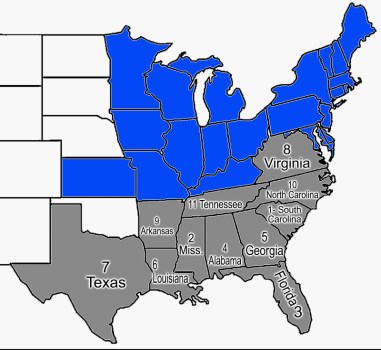
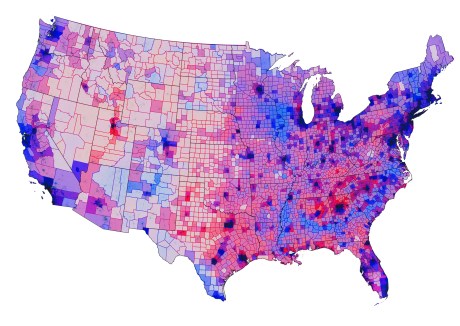 Of course, the challenge is that our national disputes do not conform to neat geography, as recent results of the Electoral College show. A swath of the Plains glows as red as the Deep South, and the West Coast is as blue as the Northeast. All over the country, the red/blue maps are inaccurate, as
  As a hundred million viewers turn on the 50th Super Bowl, I offer 10 perspectives on turning it off.
 I’m glad I don’t vote in Iowa – for a ton of reasons, including I don’t have to make a choice today.
